Contents
Best Studio Monitors Under $200: Top Picks for Home Studios
TL;DR: The best studio monitors under $200 deliver honest, flat-response sound for accurate mixing without breaking the bank. The Yamaha HS5 and Adam Audio T5V lead the pack for serious work, while the PreSonus Eris E5 XT punches above its price. Budget tighter? The M-Audio BX5 D3 covers the basics. Any of these will outperform consumer speakers for critical listening.
Why Studio Monitors Under $200 Actually Work Now
The sub-$200 monitor market has matured dramatically. Manufacturers now fit acoustic tuning, class-D amplification, and waveguide-controlled tweeters into speakers that would have cost twice as much a decade ago. You’re not buying a compromise — you’re buying last generation’s pro gear at today’s budget price.
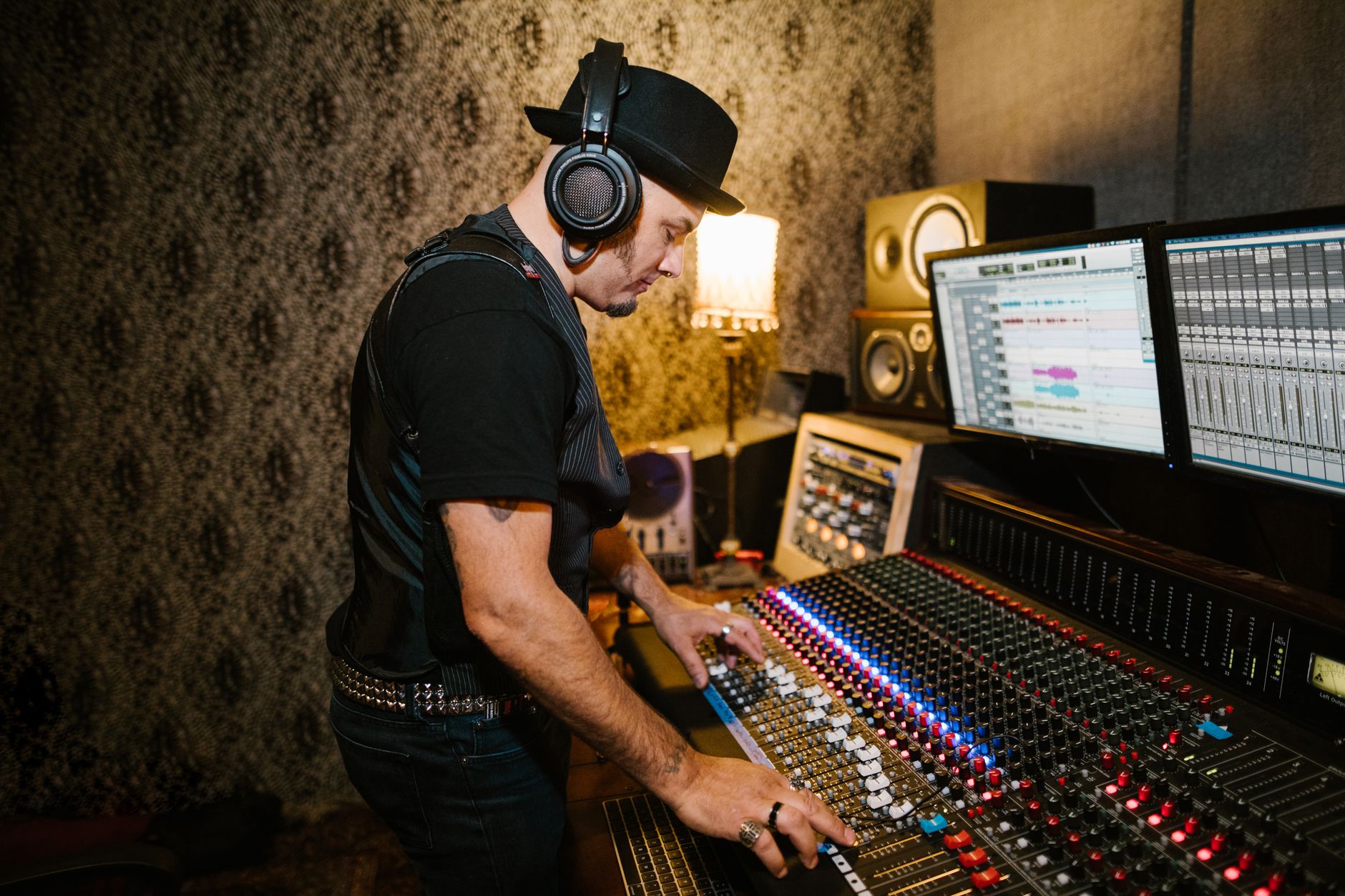 Photo: RDNE Stock project via Pexels
The key shift: budget monitors used to color sound to flatter buyers. Modern sub-$200 options prioritize flatness because producers have gotten smarter. A speaker that makes your mix sound great in the room will make it sound wrong everywhere else.
What you sacrifice at this price point is mainly low-end extension (most roll off below 50–60 Hz, making a subwoofer worthwhile for bass-heavy genres) and stereo imaging precision compared to $500+ monitors. For the bedroom producer mixing rock, pop, podcast, or electronic music without wall-shaking sub content, these gaps are manageable.
The Best Studio Monitors Under $200: Our Top Picks
Five monitors earn serious consideration in this price range. The Yamaha HS5 remains the benchmark for honest low-mid translation; the Adam Audio T5V wins on high-frequency detail; the PreSonus Eris E5 XT offers the best tuning flexibility; the KRK Rokit 5 G4 suits producers who mix with their ears and their gut; the M-Audio BX5 D3 is the entry-level choice that doesn’t embarrass itself.
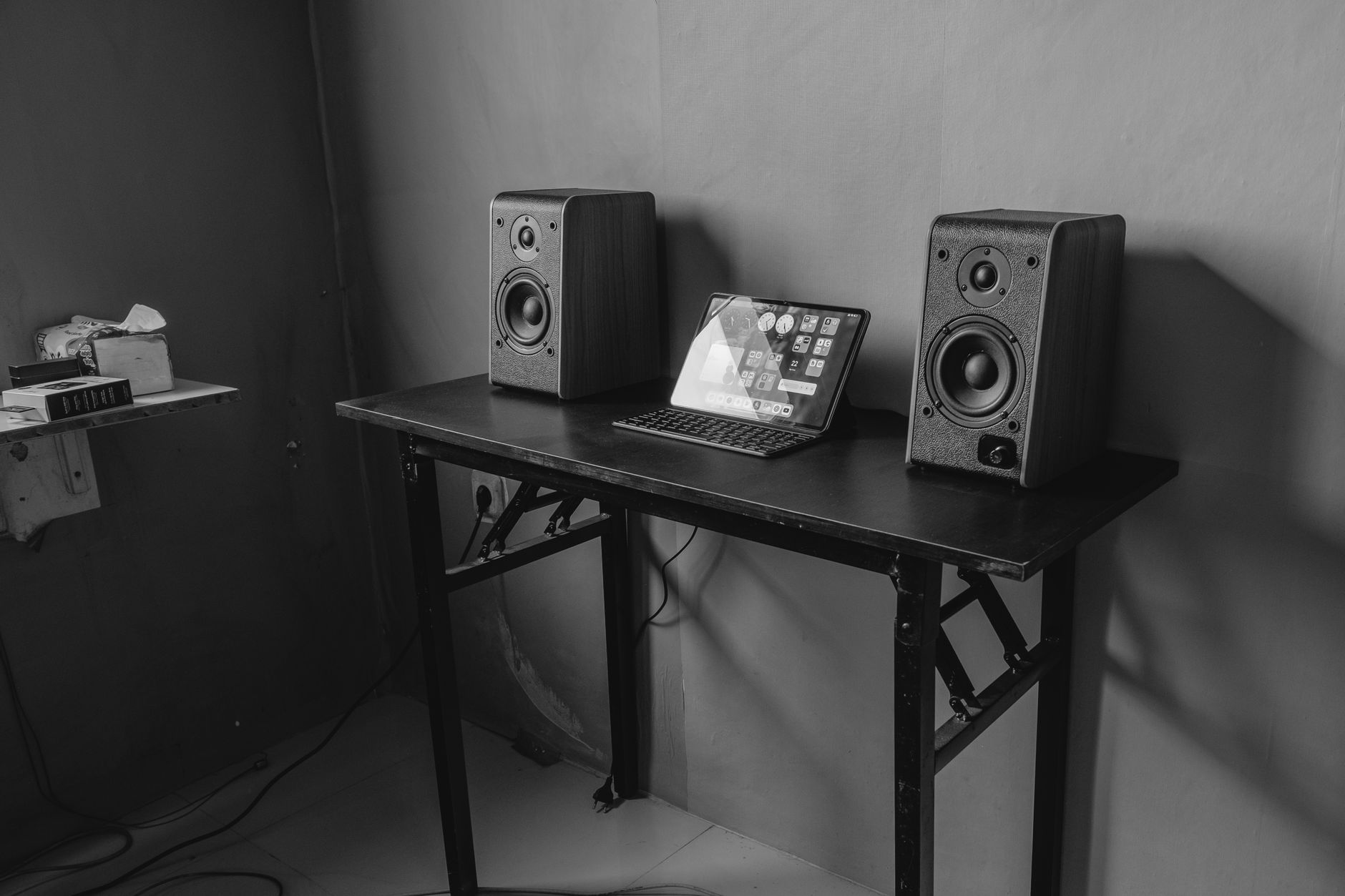 Photo: Sogi . via Pexels
Yamaha HS5
The HS5 is the reference point for this category. Its “NS-10 DNA” — relentlessly honest midrange reproduction — means mixes translate to car stereos, earbuds, and phone speakers with minimal surprises.
Specs:
| Spec | Detail |
|---|---|
| Driver configuration | 5“ woofer, 1“ tweeter |
| Frequency response | 54 Hz – 30 kHz |
| Amplifier power | 45W (LF) + 25W (HF) |
| Inputs | XLR, TRS |
| Room controls | High trim, room/mid EQ switches |
| Dimensions (each) | 6.7“ × 11.2“ × 7.9“ |
The HS5 sounds harsh to ears trained on consumer speakers. That’s the point. Its high-frequency honesty exposes sibilance, harsh reverb tails, and over-compressed transients before they hit a playlist. Published frequency response data shows a notably flat curve between 100 Hz and 10 kHz — the mixing-critical range.
One limitation: the 5“ woofer genuinely cannot reproduce sub-bass. Bass guitars and kick drums show up, but 60 Hz and below is guesswork without a sub. For hip-hop, trap, or bass-heavy electronic production, budget for a sub or cross-reference on headphones.
The -2 dB / -4 dB room EQ switches are genuinely useful — most home studios have a bass buildup from corner/wall placement that these can partially counteract.
Adam Audio T5V
The T5V earns its reputation from a single differentiator: Adam’s proprietary ribbon tweeter (A.R.T. — Accelerating Ribbon Technology). At this price point, getting a ribbon tweeter instead of a conventional dome is unusual.
Specs:
| Spec | Detail |
|---|---|
| Driver configuration | 5.5“ woofer, 1.9“ ribbon tweeter |
| Frequency response | 45 Hz – 25 kHz |
| Amplifier power | 50W (LF) + 20W (HF) |
| Inputs | XLR, RCA |
| Room controls | High shelf, low shelf trim |
| Dimensions (each) | 7.1“ × 11.7“ × 8.5“ |
The ribbon tweeter extends to 25 kHz with lower distortion than comparable dome designs, according to Adam’s published specifications. The practical result: high-frequency detail is more apparent — cymbal shimmer, vocal air, plugin saturation artifacts all present more clearly than on the HS5.
 Photo: Shazard R. via Pexels
The 5.5“ woofer gives slightly more low-end body than the HS5’s 5“, and the published frequency response shows usable output to 45 Hz — closer to real low-end monitoring than most competitors at this price. The RCA input (rather than dual XLR/TRS) is an unusual choice; XLR input is available but check your interface’s output configuration before buying.
Expert consensus places the T5V as the better choice for mixing music with complex high-frequency content — acoustic instruments, orchestral work, vocals with heavy processing. For purely electronic or hip-hop production where sub-translation matters more than air, the HS5 may edge it out.
PreSonus Eris E5 XT
The Eris E5 XT wins the tuning-flexibility category. Its front-panel Acoustic Space and High/Mid/Low controls let you dial in compensation for room placement and listening environment — more adjustability than either the HS5 or T5V at this price.
Specs:
| Spec | Detail |
|---|---|
| Driver configuration | 5.25“ Kevlar woofer, 1“ silk dome tweeter |
| Frequency response | 53 Hz – 22 kHz |
| Amplifier power | 80W (combined) |
| Inputs | XLR/TRS combo, RCA |
| Room controls | Acoustic Space (0/-2/-4 dB), High/Mid EQ |
| Dimensions (each) | 6.8“ × 10.2“ × 8.0“ |
The Kevlar woofer is a genuine differentiator — Kevlar damps midrange resonances more effectively than polypropylene at this price, contributing to relatively clean upper-bass reproduction. The Acoustic Space switch addresses the most common home-studio problem: bass reinforcement from nearby walls.
At 80W combined amplification, the E5 XT plays louder before distorting than the HS5 or T5V — useful if your room is larger than the typical 10×12 bedroom studio.
The tradeoff: the high-frequency detail doesn’t match the T5V’s ribbon tweeter, and the midrange isn’t quite as ruthlessly honest as the HS5. But the E5 XT is more forgiving to set up well in a real room — for producers who haven’t treated their acoustic environment, this flexibility matters.
KRK Rokit 5 G4
The Rokit 5 G4 is the most controversial pick on this list — professionals either love or dismiss KRK’s characteristic low-mid bump. That said, the G4 generation added a 25-band DSP EQ app via Bluetooth, making it the most technically adjustable monitor here.
Specs:
| Spec | Detail |
|---|---|
| Driver configuration | 5“ glass-aramid woofer, 1“ soft-dome tweeter |
| Frequency response | 43 Hz – 40 kHz |
| Amplifier power | 55W (combined) |
| Inputs | XLR, TRS |
| Room controls | 25-band DSP EQ (via KRK app) |
| Dimensions (each) | 7.5“ × 11.3“ × 8.7“ |
The G4’s factory voicing is not flat — there’s a low-mid warmth that makes recordings sound fuller in the room. Expert consensus is that this coloration trains ears to mix with too much bass, and mixes made on KRKs can sound thin elsewhere. The DSP app can flatten this, but requires a calibration effort most buyers won’t complete.
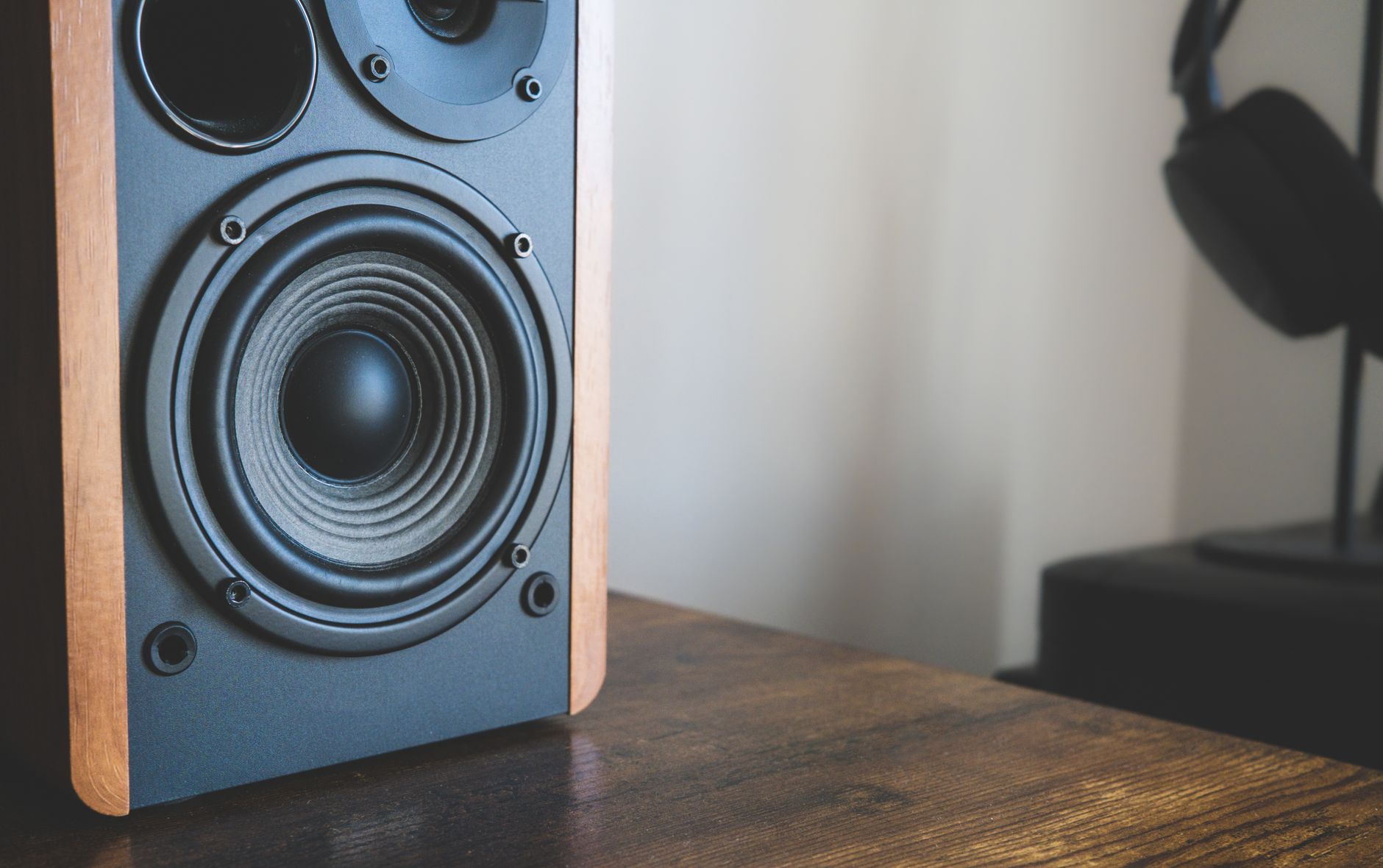 Photo: Norman Balian via Pexels
Where the Rokit 5 G4 genuinely excels: extended high-frequency response to 40 kHz (beyond audible range, but relevant for harmonic detail), and the sub-100 Hz extension to 43 Hz that makes bass-heavy genres more workable without a sub. Published testing data shows the G4 has measurably lower distortion than the G3 generation across the midrange.
Best for: producers who are experienced enough to cross-reference and trust their ears on multiple playback systems rather than relying on monitor accuracy alone.
M-Audio BX5 D3
The BX5 D3 is the honest entry-level option. It doesn’t compete with the monitors above on detail or accuracy, but at under $80/pair (street price), it gives bedroom producers a flat-ish reference for less than the cost of a studio session.
Specs:
| Spec | Detail |
|---|---|
| Driver configuration | 5“ polypropylene woofer, 1“ silk dome tweeter |
| Frequency response | 56 Hz – 22 kHz |
| Amplifier power | 30W (combined) |
| Inputs | XLR/TRS combo, RCA |
| Room controls | None |
| Dimensions (each) | 7.0“ × 11.7“ × 8.2“ |
No room EQ, 30W combined power, and a polypropylene woofer that won’t resolve midrange detail the way the Eris E5 XT’s Kevlar cone does. But the frequency response is reasonably flat in the critical midrange, and the BX5 D3 gets the fundamentals right for the price.
This is the starting point, not the destination. Use it to build your ears, save up for an upgrade, and cross-reference constantly on headphones, earbuds, and car stereos.
Full Comparison: Best Studio Monitors Under $200
| Monitor | Street Price (pair) | Woofer | Amp Power | Low-End Ext. | Room EQ | Best For |
|---|---|---|---|---|---|---|
| Yamaha HS5 | ~$400 | 5“ | 70W total | 54 Hz | Yes (3-position) | Translation accuracy, tracking |
| Adam Audio T5V | ~$350 | 5.5“ | 70W total | 45 Hz | Shelf trims | HF detail, mixing complex music |
| PreSonus Eris E5 XT | ~$250 | 5.25“ Kevlar | 80W total | 53 Hz | Yes (most flexible) | Untreated rooms, versatile use |
| KRK Rokit 5 G4 | ~$300 | 5“ glass-aramid | 55W total | 43 Hz | 25-band DSP | Bass genres, experienced mixers |
| M-Audio BX5 D3 | ~$150 | 5“ poly | 30W total | 56 Hz | None | Absolute beginners, tight budgets |
Note: Street prices fluctuate. The Yamaha HS5 frequently sells as a single unit (~$200 each); verify current pricing before purchasing.
How to Choose: By User Type
First-time beginner: Start with the M-Audio BX5 D3 or PreSonus Eris E5 XT. The BX5 D3 keeps costs low while you learn whether you’ll commit to home recording. The E5 XT is the better long-term investment if your budget stretches.
Bedroom producer (electronic / hip-hop): The KRK Rokit 5 G4’s extended low-end makes bass monitoring more workable, and the DSP EQ lets you tame the house curve once you’re ready. Alternatively, pair the Yamaha HS5 with headphone cross-referencing.
Singer-songwriter / acoustic recording: The Adam Audio T5V’s ribbon tweeter will reveal vocal and acoustic instrument detail that the other monitors miss. This is where that HF resolution earns its keep.
Prosumer / semi-professional: The Yamaha HS5 is the industry-standard reference for a reason. Mixes made on HS5s tend to translate. If you’re approaching a level where your work goes to mastering engineers or other studios, speaking the same reference language matters.
Room Placement Tips That Matter More Than the Monitor You Buy
A $400 pair of Yamaha HS5s in the wrong position will sound worse than $150 BX5 D3s placed correctly. The basics:
- Equilateral triangle: Position monitors and your head at equal distances (typically 3–5 feet), angled 30° inward toward your listening position.
- Tweeter at ear height: This is non-negotiable for imaging accuracy. Monitor stands or isolation pads help achieve this.
- Distance from walls: Keep the rear of monitors at least 12 inches from the back wall; more distance = less bass buildup. Use the room EQ switches on the HS5 or E5 XT if you can’t achieve this.
- Isolation pads: Placing monitors directly on a desk transfers vibration and creates resonance. Foam isolation pads ($20–$40/pair) make a measurable difference in imaging clarity.
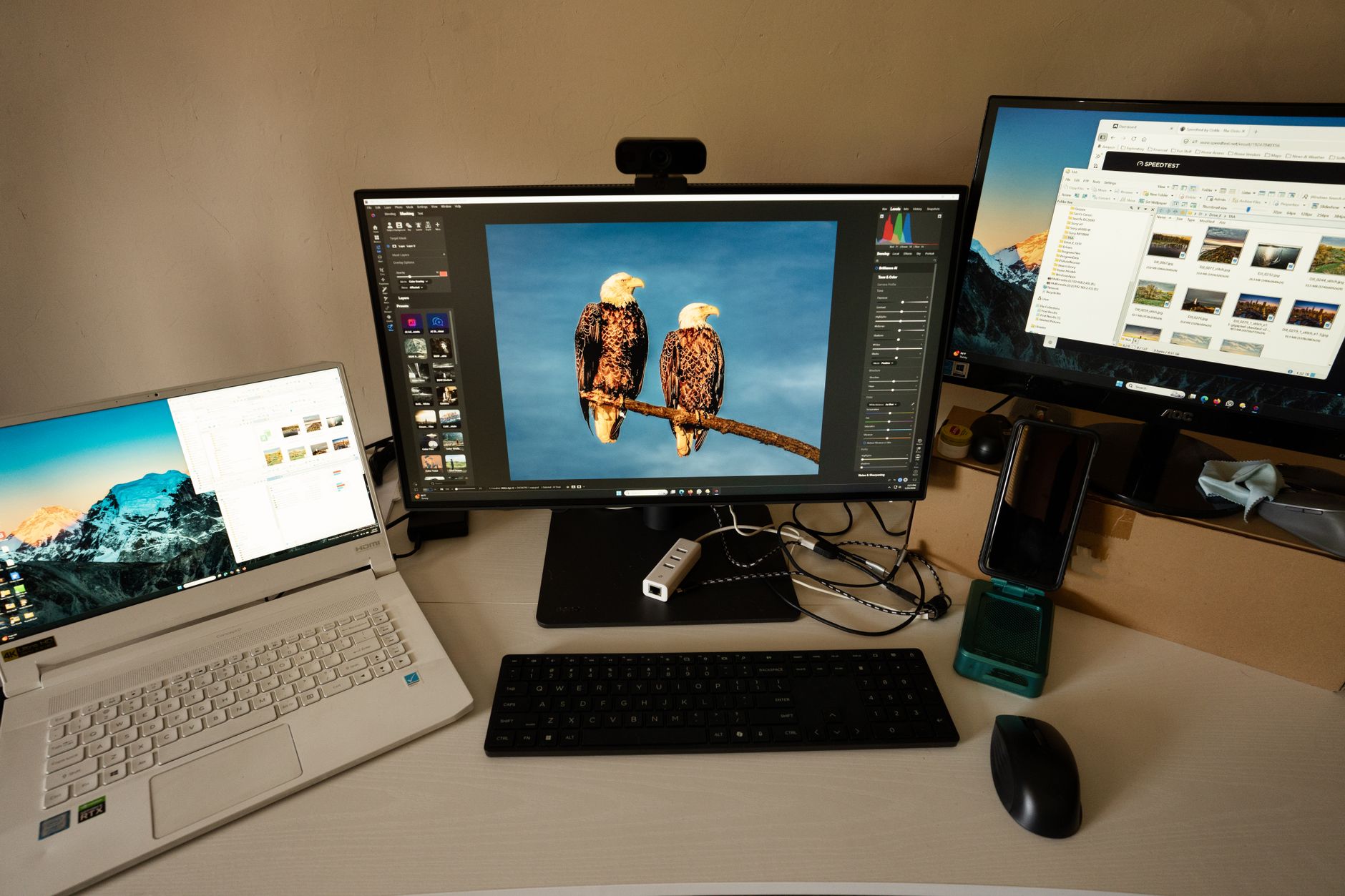 Photo: Tom Fisk via Pexels
→ See also
- Best Studio Monitors for Home Recording (2026) — the full-range guide covering every price tier
- Best Studio Monitors Under $150 — if the budget is tighter
- Best Studio Monitors for a Bedroom Studio — placement, acoustic treatment, and picks optimized for small rooms
FAQ
Q: Are studio monitors under $200 good enough for professional mixing? Professional engineers use $200 monitors for reference and cross-checking, not primary mixing. At this price you get accurate midrange and usable imaging, which is sufficient for non-commercial work, learning, and producing demos. For releases headed to streaming platforms, the limiting factor at this price point is low-end accuracy — investing in a sub or headphone cross-referencing closes most of that gap.
Q: Should I buy one studio monitor or a pair? Always buy a pair. Stereo imaging — the left/right width and depth of a mix — is impossible to evaluate on a single speaker. Every monitor on this list is priced per unit or per pair; check carefully, as some retailers (especially for the Yamaha HS5) list single-unit pricing.
Q: Do I need acoustic treatment if I buy good monitors? Acoustic treatment helps any monitor perform better, but it’s not a prerequisite for starting. Basic treatment — even moving a couch or bookshelf behind your listening position — reduces reflections measurably. At the sub-$200 price point, spending $50–$100 on basic corner bass traps and a reflection panel will improve your mixing environment more than upgrading from the BX5 D3 to the HS5.
Q: What’s the difference between active and passive studio monitors? All five monitors in this guide are active (powered) — they have built-in amplifiers. Passive monitors require a separate power amplifier, which adds cost and complexity. For home recording and bedroom production, active monitors are the right choice at this price.
Q: Do studio monitors under $200 need a subwoofer? For genres with significant sub-bass content (hip-hop, trap, electronic dance music, film scoring), yes — the 5“ woofers in this price range roll off sharply below 50–60 Hz. The KRK Rokit 5 G4 extends furthest at 43 Hz, but even that isn’t true sub-bass monitoring. For rock, pop, acoustic, folk, or podcast production, a subwoofer is optional rather than essential.
Q: Are Yamaha HS5 monitors actually worth twice the price of the M-Audio BX5 D3? For serious mixing work, yes. The HS5’s midrange accuracy and translation to other playback systems is a professional-grade capability that the BX5 D3 approximates but doesn’t match. The practical test: mixes made on HS5s require less revision after A/B testing on other speakers. If you’re making music you care about hearing accurately, the HS5 is worth the stretch.
Q: Can I use studio monitors as computer speakers for general listening? You can, but the listening experience will be less enjoyable than consumer speakers. Studio monitors are designed for accuracy, not flattery — music sounds more neutral and less exciting than on speakers tuned to boost bass and treble. Most home recording producers use studio monitors during work and consumer speakers or headphones for casual listening.
Editorial methodology: Assessments are based on manufacturer specifications, published user reviews, and editorial research. Physical hands-on testing is noted explicitly where it occurred. Rankings reflect our editorial judgment and are not influenced by affiliate commission rates. Full editorial policy · Affiliate disclosure