Contents
Focusrite Scarlett 2i2 vs Solo: Which Should You Buy?
TL;DR: The focusrite scarlett 2i2 vs focusrite scarlett solo comparison comes down to one question — do you need two simultaneous inputs? The Solo costs less and handles solo vocals or guitar perfectly. The 2i2 adds a second combo input and stereo monitoring, making it the better buy for most people. Get the Solo only if you’re certain you’ll never record two sources at once.
| Scarlett Solo | Scarlett 2i2 | |
|---|---|---|
| Price | ~$120 | ~$160 |
| XLR/combo inputs | 1 | 2 |
| Record 2 mics at once | ✗ | ✓ |
| Stereo monitor outputs | 3.5mm | 2× ¼“ TRS |
| Per-channel phantom power | ✗ | ✓ |
| Best for | Solo vocals/guitar | Most setups |
What’s Actually Different Between the Solo and 2i2?
The Solo has one combo XLR/instrument input and one line input. The 2i2 has two combo XLR/instrument inputs and dedicated stereo monitor outputs. That’s the whole difference. Preamp quality, converters, and software bundle are identical across both.
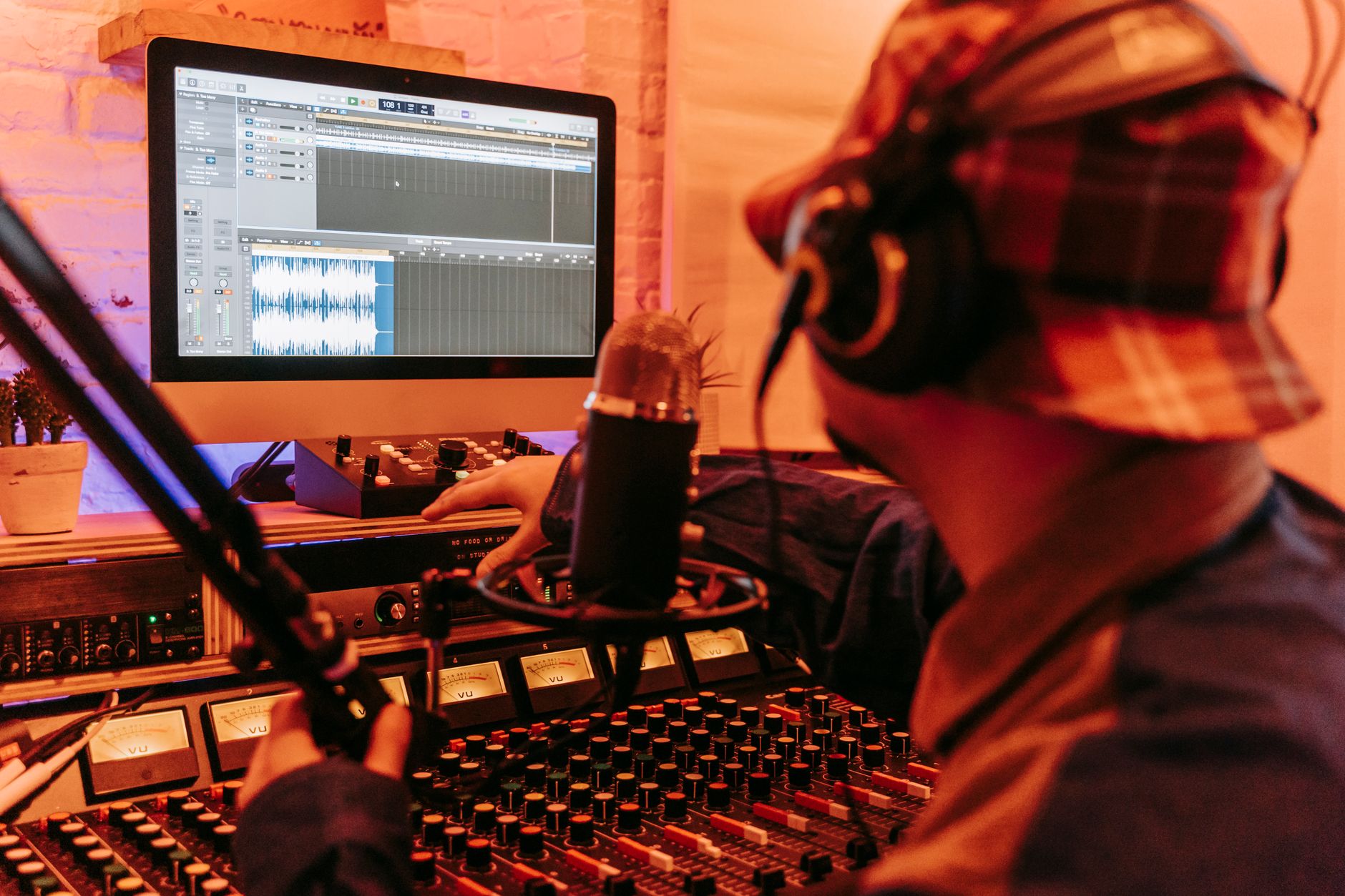
 Photo: Polina Tankilevitch via Pexels
Both run on USB bus power, both ship with the same fourth-generation preamps carrying 56 dB of gain, and both include the Air mode that adds high-frequency presence to emulate Focusrite’s ISA transformer-based preamps. The price gap between them is roughly $30–40 at most retailers — a difference that disappears over any equipment budget worth discussing.
The Solo’s “second input” catches people off guard: it’s a fixed line-level input on the back, not a combo XLR socket. You can’t run a second microphone into it. If you’ve ever considered recording acoustic guitar and vocals at the same time, or doubling up two mics on an amp, the Solo physically cannot do it.
Specs and I/O: Solo vs 2i2 Head-to-Head
| Spec | Scarlett Solo (4th Gen) | Scarlett 2i2 (4th Gen) |
|---|---|---|
| Combo XLR/TRS inputs | 1 | 2 |
| Line inputs | 1 (rear, fixed) | — (both inputs are combo) |
| Monitor outputs | 1x stereo 3.5mm | 2x 1/4“ TRS (L/R) |
| Headphone outputs | 1 | 1 |
| Phantom power | 48V (global) | 48V (per channel) |
| Preamp gain | 56 dB | 56 dB |
| Bit depth / sample rate | 24-bit / 192 kHz | 24-bit / 192 kHz |
| Bus powered | Yes (USB-C) | Yes (USB-C) |
| Air mode | Yes | Yes |
| Direct monitor | Mono only | Mono + Stereo |
| Approx. street price | ~$120 | ~$160 |
One underappreciated difference: the 2i2 has per-channel phantom power, letting you run a condenser on channel 1 and a ribbon (which can be damaged by phantom) on channel 2 without issue. The Solo’s phantom power is global — it applies to both inputs simultaneously — which matters if you ever mix mic types.
Scarlett 2i2 Line vs Inst Input: When to Use Each
On the 4th Gen 2i2, each combo input switches between two modes: “Line/Inst.” Set it to Inst (instrument, Hi-Z) for a guitar or bass plugged in directly with a ¼“ cable — it presents the high impedance a passive pickup needs. Set it to Line for a keyboard, synth, drum machine, or the output of an external preamp or mixer, which run at hotter line level. Using the wrong mode is the most common cause of a thin or distorted signal.
The Solo has this same instrument switch on its single combo input, but its rear line input is fixed — you can’t switch it. On the 2i2 (4th Gen), both inputs are fully switchable, so you can track a guitar (Inst) and a synth (Line) at the same time. Quick reference:
| Source | Mode | Why |
|---|---|---|
| Electric guitar / bass (direct) | Inst (Hi-Z) | Matches passive pickup impedance, preserves treble |
| Keyboard / synth / drum machine | Line | Line-level output, no impedance matching needed |
| External preamp or mixer output | Line | Signal already amplified to line level |
| Microphone (XLR) | — (auto) | XLR path uses the mic preamp regardless of the switch |
Preamp Quality and Audio Performance
Both interfaces use the same fourth-generation Scarlett preamp circuit. Published measurements show equivalent dynamic range (111 dB), equivalent THD+N, and equivalent noise floor. Choosing between them on sound quality grounds is not justified by the data.
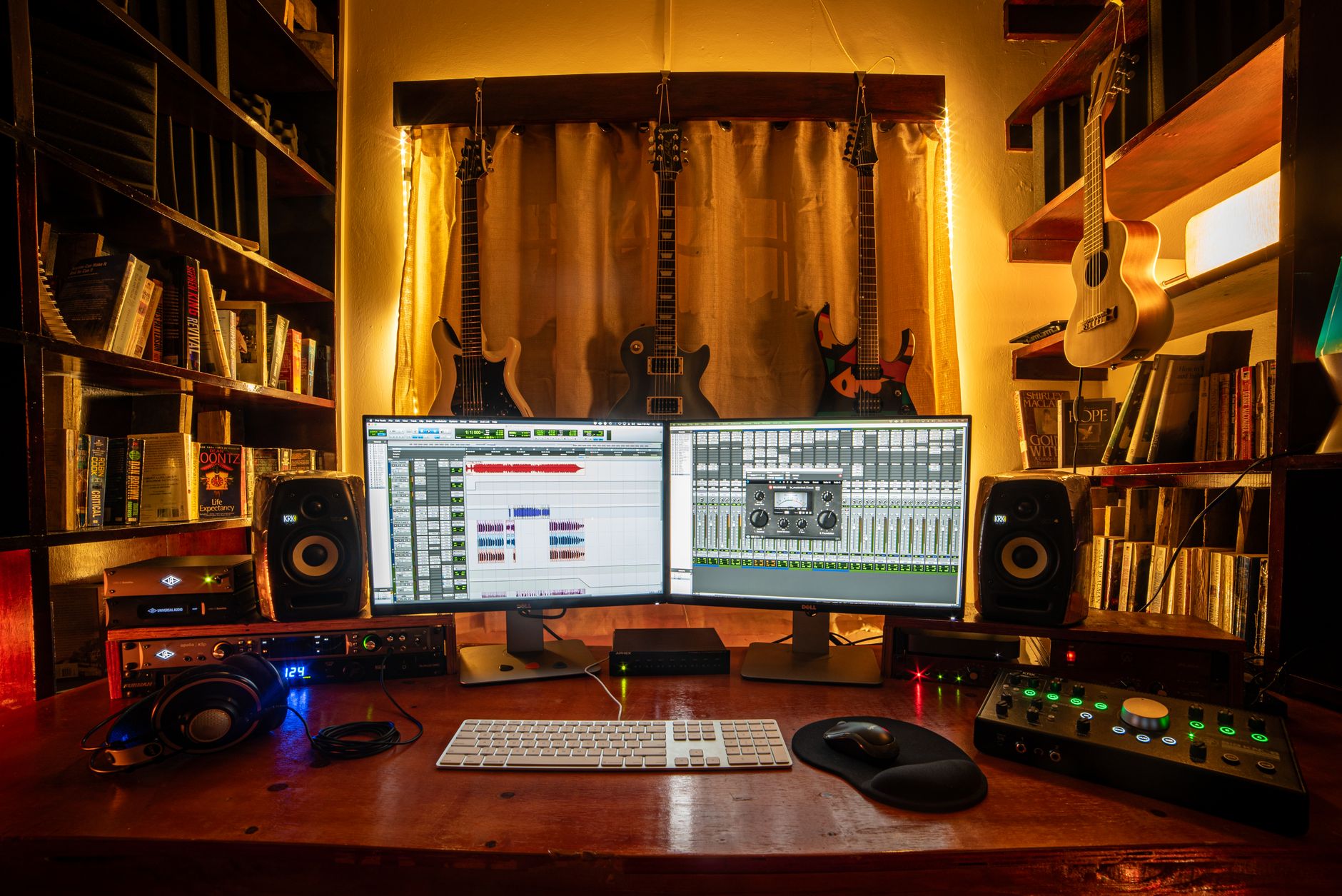
 Photo: TUAN HOANG NGUYEN via Pexels
The Air mode is implemented identically on both units. According to Focusrite’s published specifications, it applies a presence curve modeled on the transformer-coupled ISA preamp topology. Whether you engage it on a Solo or a 2i2, you’re running the same algorithm.
Where the 2i2 pulls ahead for critical monitoring work is its balanced 1/4“ TRS monitor outputs. The Solo’s 3.5mm stereo output works with consumer headphones and basic speaker setups, but balanced quarter-inch connections reduce interference over longer cable runs and are the standard termination for studio monitors. If you’re running a pair of KRK Rokits, Yamaha HS5s, or similar nearfield monitors, the 2i2’s outputs are the right connection.
Who Should Buy the Scarlett Solo?
The Solo is the right buy for a single vocalist, a guitarist recording direct, or a podcaster running one mic. If your entire recording workflow is one source at a time and you’re certain it will stay that way, the Solo does everything the 2i2 does at that use case for less money.
 Photo: Jorge David Arley Campos via Pexels
Specific cases where the Solo wins:
- Voice-over and podcast: One condenser or dynamic mic, one person talking. The Solo handles this without compromise.
- Singer-songwriter demos: One mic at a time, overdubbed. The workflow is sequential, not simultaneous, so a single combo input is never a bottleneck.
- Guitar direct: Plug into the instrument input, track it clean, add amp simulation in the DAW. One input is all you need.
- Strict budget situations: If $40 is genuinely meaningful to your current budget, the Solo is not a downgrade for these use cases.
The honest caveat: most people who start with a Solo eventually wish they’d bought the 2i2. Recording acoustic guitar and singing at the same time, adding a room mic, or collaborating with another musician in the room — all of these require a second simultaneous input. The upgrade cost later is higher than the $40 difference now.
Who Should Buy the Scarlett 2i2?
Buy the 2i2 if there’s any chance you’ll ever record two sources simultaneously, if you’re running studio monitors over balanced cables, or if you want per-channel phantom power control. For most home studio setups, the 2i2 is the correct default.
 Photo: Los Muertos Crew via Pexels
The 2i2 makes sense for:
- Singer-songwriters who record live: Guitar and vocal mic in one take, no overdubs required.
- Guitarists using two mics on a cab: Close mic and room mic simultaneously — a standard technique for amp character.
- Anyone running studio monitors: Balanced 1/4“ outputs are worth the price difference alone.
- Podcasters with two guests: Two dynamic mics, two inputs, done.
- Producers who collaborate in person: A second person with an instrument or mic doesn’t require them to wait.
The 2i2 is Focusrite’s best-selling interface for a reason — it sits at the intersection of price, capability, and real-world recording workflows. The vast majority of home studio recordings involve either two simultaneous sources or the monitoring setup that justifies the better output stage.
Gear Review: Focusrite Scarlett 2i2 (4th Gen)
Specifications
| Category | Specification |
|---|---|
| Connections | 2x combo XLR/TRS (front), 2x 1/4“ TRS monitor out (rear), 1x 3.5mm headphone, USB-C |
| I/O count | 2 in / 2 out |
| Preamps | 2x Focusrite 4th-gen, 56 dB gain, Air mode |
| Bit depth / Sample rate | 24-bit / 192 kHz |
| Bus power | Yes (USB-C) |
| Best For | Home studio, singer-songwriter, bedroom producer |
Verdict by Archetype
First-time beginner: The 2i2 is the safer first interface. The $40 premium over the Solo buys future-proofing that most beginners need within six months.
Bedroom producer: Two inputs, decent monitor outputs, solid preamps — this is the workhorse of the home studio segment for good reason. Nothing to justify spending more at this stage.
Gigging musician: The 2i2 works for home tracking between gigs. It’s not a stage unit, but for demo capture and practice recording it’s practical.
Prosumer: You’ll hit the ceiling — two inputs isn’t enough for drum recording or a full band. Look at the Scarlett 4i4 or 18i20 as the next step up. But for two-input work the preamps are clean enough not to be the limiting factor.
Comparison Table
| Product | Price | Key Spec | I/O | Best For | Verdict |
|---|---|---|---|---|---|
| Scarlett Solo (4th Gen) | ~$120 | 1 combo input, 56 dB gain | 1 in / 2 out | Single-source recording | Best only if truly one-input forever |
| Scarlett 2i2 (4th Gen) | ~$160 | 2 combo inputs, per-channel phantom | 2 in / 2 out | Home studio default | Best buy for most people |
| SSL 2 | ~$200 | 2 inputs, SSL Legacy 4K mode | 2 in / 2 out | Character-forward sound | Worth the premium for harmonic color |
| UA Volt 2 | ~$200 | 2 inputs, Vintage preamp mode | 2 in / 2 out | Analog warmth seekers | Compete with 2i2 on features, win on tone |
→ See also:
- Scarlett 2i2 Line vs Instrument Input: When to Use Each
- SSL 2 vs Focusrite Scarlett 2i2: Which Should You Buy?
- Universal Audio Volt 2 vs Focusrite Scarlett 2i2: Which Should You Buy?
FAQ
Should I get the Scarlett Solo or 2i2? Get the 2i2. For most people, the extra $50 buys you a second mic/instrument input, stereo monitoring outputs, and better headroom for recording two sources simultaneously — the Solo is only the right call if you are certain you will never record more than one source at a time.
What is the difference between Scarlett Solo and 2i2? The 2i2 has two combo XLR/instrument inputs (the Solo has one), stereo outputs (the Solo is mono), and slightly more output drive. Preamp quality, latency, and converter specs are identical across both fourth-generation models according to Focusrite’s published specifications.
Q: Can the Scarlett Solo record two microphones at once? No. The Solo has one combo XLR/instrument input. Its second input is a fixed line-level socket on the rear panel that does not accept XLR connections. If you need two mics simultaneously, the 2i2 is the minimum required interface.
Q: Is the audio quality better on the 2i2 than the Solo? No — according to Focusrite’s published specifications, both use identical fourth-generation preamp circuits with the same gain range, dynamic range, and noise floor. The difference is I/O configuration and output connections, not sound quality.
Q: Does the Scarlett 2i2 work with iPad and iPhone? Yes. The fourth-generation 2i2 is USB-C and works with iOS and iPadOS devices via a USB-C to USB-C cable (or USB-C to Lightning adapter for older iPhones). The Solo works the same way.
Q: What DAW comes with the Scarlett interfaces? Both the Solo and 2i2 include Ableton Live Lite and a subscription to Pro Tools Intro via Focusrite’s software bundle. They also include a plugin bundle with instruments and effects from third-party developers. The bundle is identical across both models.
Q: Is the Focusrite Scarlett 2i2 good enough for professional recordings? For vocals, acoustic instruments, and direct-input sources, the 2i2’s preamps are clean and capable enough that they won’t be the limiting factor in a home recording. Published measurements show a dynamic range and noise floor competitive with interfaces costing significantly more. The ceiling is the room acoustics and microphone choice, not the interface.
Q: Can I use the Scarlett 2i2 without installing drivers? Yes. Both the Solo and 2i2 are class-compliant USB audio devices and work on macOS without additional drivers. On Windows, Focusrite’s ASIO driver is recommended for low-latency performance; it’s available as a free download from Focusrite’s website.
Q: What’s the latency like on the Scarlett 2i2? According to Focusrite’s published round-trip latency figures, the 2i2 achieves approximately 2.99 ms round-trip at 96 kHz with a 64-sample buffer under ASIO on Windows. Direct monitoring (bypassing the computer entirely) introduces zero latency and is available on both the Solo and 2i2.
Editorial methodology: Assessments are based on manufacturer specifications, published user reviews, and editorial research. Physical hands-on testing is noted explicitly where it occurred. Rankings reflect our editorial judgment and are not influenced by affiliate commission rates. Full editorial policy · Affiliate disclosure