
Contents
Yamaha HS5 Review (2026): Still Worth It?
TL;DR: The Yamaha HS5 remains one of the most honest studio monitors under $200, delivering a flat, unforgiving frequency response that reveals mix problems before they reach other playback systems. At ~$200/unit, it’s the best choice for bedroom producers who want accurate mixes, not flattering ones — though the limited low-end means pairing with a subwoofer is worth considering.
What Is the Yamaha HS5?
The Yamaha HS5 is a 5-inch, bi-amped nearfield studio monitor designed for accurate, reference-grade monitoring in home and project studios. It delivers 54Hz–30kHz frequency response, 70W total power, and the “white woofer” signature that’s been a home-studio standard since the HS series launched.
 Photo: Charly Louise via Pexels
The HS5 is the entry point to Yamaha’s HS series, sitting below the HS7 and HS8. It inherits the design philosophy of Yamaha’s legendary NS-10M — a monitor notorious for revealing mix flaws rather than masking them. That legacy is both the HS5’s greatest strength and its biggest selling point: if your mix sounds good here, it translates.
The 2026 unit is unchanged from recent production runs. There are no new editions or revisions — and for most buyers, that’s fine. The core acoustic design has been solid for years.
Sound Quality: Honest to a Fault
The HS5 is deliberately flat and unforgiving. Low end rolls off below 80Hz in real-world use, mids are precise without being harsh, and the top end is extended without adding shimmer. You will hear every problem in your mix — compression artifacts, muddy low-mids, sibilance — exactly as they are.
 Photo: Anna Pou via Pexels
This is intentional. Yamaha engineered the HS series around translation — how a mix sounds across consumer speakers, earbuds, and car systems. The HS5 doesn’t make music sound good; it makes problems audible. For mixing and referencing, that’s exactly what you need.
The low-end limitation is real. Published specifications show a -10dB point around 54Hz, which means kick drum sub-frequencies and bass below 60Hz are reproduced at reduced level. At moderate volumes in an untreated room, this reads as “tight but thin.” It’s not a flaw in the monitor — it’s physics. A 5-inch driver in a sealed enclosure cannot move enough air to accurately reproduce 40Hz.
Where the HS5 excels is the midrange and upper-midrange, roughly 200Hz–5kHz — the range where most mix decisions live. Vocal clarity, guitar presence, piano body: these are rendered with precision that competes with monitors well above this price point.
Build Quality and Features
The HS5 is a solidly built, relatively simple monitor. MDF cabinet, rear-ported bass reflex, XLR and TRS balanced inputs. Room control and high-trim switches allow limited acoustic compensation. No DSP, no Bluetooth, no USB — analog only.
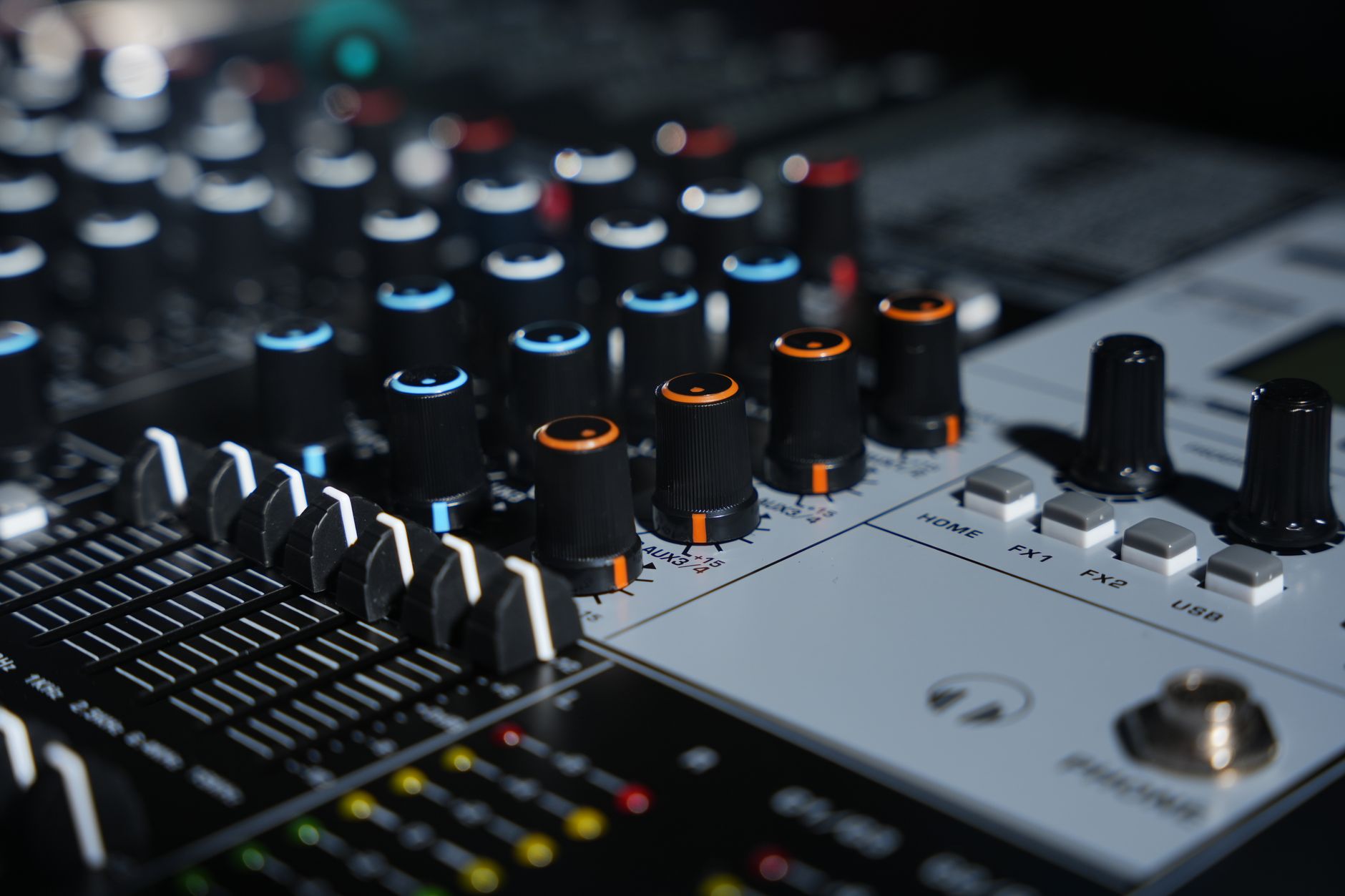 Photo: TUAN HOANG NGUYEN via Pexels
| Spec | Detail |
|---|---|
| Woofer | 5“ cone |
| Tweeter | 1“ dome |
| Power (LF/HF) | 45W + 25W bi-amp |
| Frequency Response | 54Hz–30kHz |
| Inputs | XLR balanced, TRS balanced |
| Room EQ | Low cut (–2dB / –4dB @ 80Hz), High trim (–2dB / +2dB @ 2kHz) |
| Dimensions | 170 × 285 × 222 mm |
| Weight | 5.3 kg |
| Bus Power | No (IEC mains) |
The room control switches are genuinely useful. The low cut at 80Hz helps compensate for bass buildup when the monitor is placed near a wall. The high-trim adjustment is subtle but audible when taming bright rooms.
One common complaint in user reviews: the HS5 benefits significantly from a subwoofer in music production contexts. Yamaha’s HS8S is the obvious partner; the combination fills in the sub-100Hz range the HS5 can’t reproduce at reference levels.
Who Is the HS5 For?
The HS5 is best for bedroom producers and home studio engineers who mix frequently and need accurate translation to other systems. It’s not the right monitor for music enjoyment, podcast monitoring, or anyone who needs deep bass reference without a sub.
First-Time Beginner
If you’re setting up your first studio and budget is tight, consider starting with the HS5 over cheaper “studio monitors” that color the sound. The HS5 teaches you to mix on unforgiving reference speakers — a skill that pays off immediately.
Bedroom Producer
The HS5 is purpose-built for this use case. Modest SPL requirements, moderate room size, frequent mixing sessions — the HS5 handles all of it. The room control switches help in untreated spaces.
Gigging Musician
Not the right tool. The HS5 is a monitoring and mixing reference, not a live playback speaker.
Prosumer / Semi-Pro
Acceptable for tracking and rough mixing, but producers working seriously in genres with heavy sub content (hip-hop, electronic, bass music) should budget for the HS5 + HS8S subwoofer combination, or move up to the HS8.
Yamaha HS5 vs. HS7 vs. Competing Monitors
| Product | Price (each) | Woofer | Low End (-10dB) | Power | Best For | Verdict |
|---|---|---|---|---|---|---|
| Yamaha HS5 | ~$200 | 5“ | 54Hz | 70W | Small rooms, bedroom mixing | Best value entry in HS line |
| Yamaha HS7 | ~$300 | 6.5“ | 43Hz | 95W | Medium rooms, full-range ref | Better bass, higher price |
| Adam Audio T5V | ~$180 | 5.5“ | 45Hz | 50W | Budget, brighter top end | Wider stereo image, more color |
| KRK Rokit 5 G4 | ~$180 | 5“ | 43Hz | 55W | Bass-forward genres | More low end, less accurate |
| PreSonus Eris E5 XT | ~$160 | 5.25“ | 53Hz | 80W | Budget-conscious engineers | Solid accuracy at lower price |
The HS7 is worth the upgrade if room size allows — the larger woofer extends low-end accuracy meaningfully, and for anyone regularly mixing in the 50–80Hz range, the step up makes sense. For tight budgets, the HS5 holds its ground against the Adam T5V and KRK Rokit 5, though each has a distinct character.
 Photo: Wallace Chuck via Pexels
→ See also
- Best Studio Monitors for Home Recording (2026) — full-category roundup with buying guide
- Best Studio Monitors Under $150 — if the HS5 is above budget
- Best Studio Monitors Under $200 — full-range alternatives at the same price point
FAQ
Is the Yamaha HS5 good for beginners? Yes — with a caveat. The HS5’s flat response is unforgiving, which is exactly right for learning to mix. Beginners who spend time on it develop better mixing instincts than those who start on colored, flattering monitors. The learning curve is steeper, but the payoff is faster skill development.
Do the Yamaha HS5 monitors need a subwoofer? For music production in bass-heavy genres, yes. The HS5’s low-end rolls off below 80Hz, so kick and bass sub-frequencies are underrepresented. For podcast production, voice-over, or genres where sub content is minimal, a sub is optional. Yamaha’s HS8S is the designed companion.
What’s the difference between the Yamaha HS5 and HS7? Woofer size: 5-inch vs. 6.5-inch. The HS7 extends low-end response to 43Hz vs. 54Hz, handles higher SPL, and suits larger rooms. Expert consensus suggests the HS7 is the better long-term investment if room size and budget allow; the HS5 is the right call for small rooms under 10×10 feet.
Are the Yamaha HS5 monitors good for gaming or music listening? Technically functional, but not the right tool. The HS5’s flat response makes music sound less exciting than consumer speakers tuned for bass and high-frequency enhancement. For critical listening or mixing, they’re excellent. For enjoyment listening, most people prefer something with more low-end presence and coloration.
How should I position the Yamaha HS5 in my room? Published acoustic guidelines recommend placing nearfield monitors at ear height, forming an equilateral triangle with the listening position, and keeping them at least 8–12 inches from rear walls to reduce bass buildup. The HS5’s rear-facing bass port makes wall proximity a real concern — use the low-cut room EQ switch if bass sounds bloated at your mix position.
Editorial methodology: Assessments are based on manufacturer specifications, published user reviews, and editorial research. Physical hands-on testing is noted explicitly where it occurred. Rankings reflect our editorial judgment and are not influenced by affiliate commission rates. Full editorial policy · Affiliate disclosure