Contents
Best Headphones for Music Production: 2026 Guide
TL;DR: The best headphones for music production depend on your use case — mixing demands flat, accurate frequency response while tracking needs isolation and comfort. The Sony MDR-7506 remains the industry workhorse for monitoring and tracking; for serious mixing, the Beyerdynamic DT 990 Pro (open-back) or Sennheiser HD 600 deliver the flatness that translates well to speakers. Budget under $100? The Audio-Technica ATH-M40x punches far above its price.
Why Headphone Choice Matters More Than You Think
Direct Answer: Most consumer headphones boost bass and treble to sound exciting — a deliberate coloration that makes mixes sound terrible on other systems. Production headphones are engineered for accuracy: a flat or gently rolling frequency response that lets you hear what’s actually in the audio signal, not what the headphone manufacturer wants you to hear.
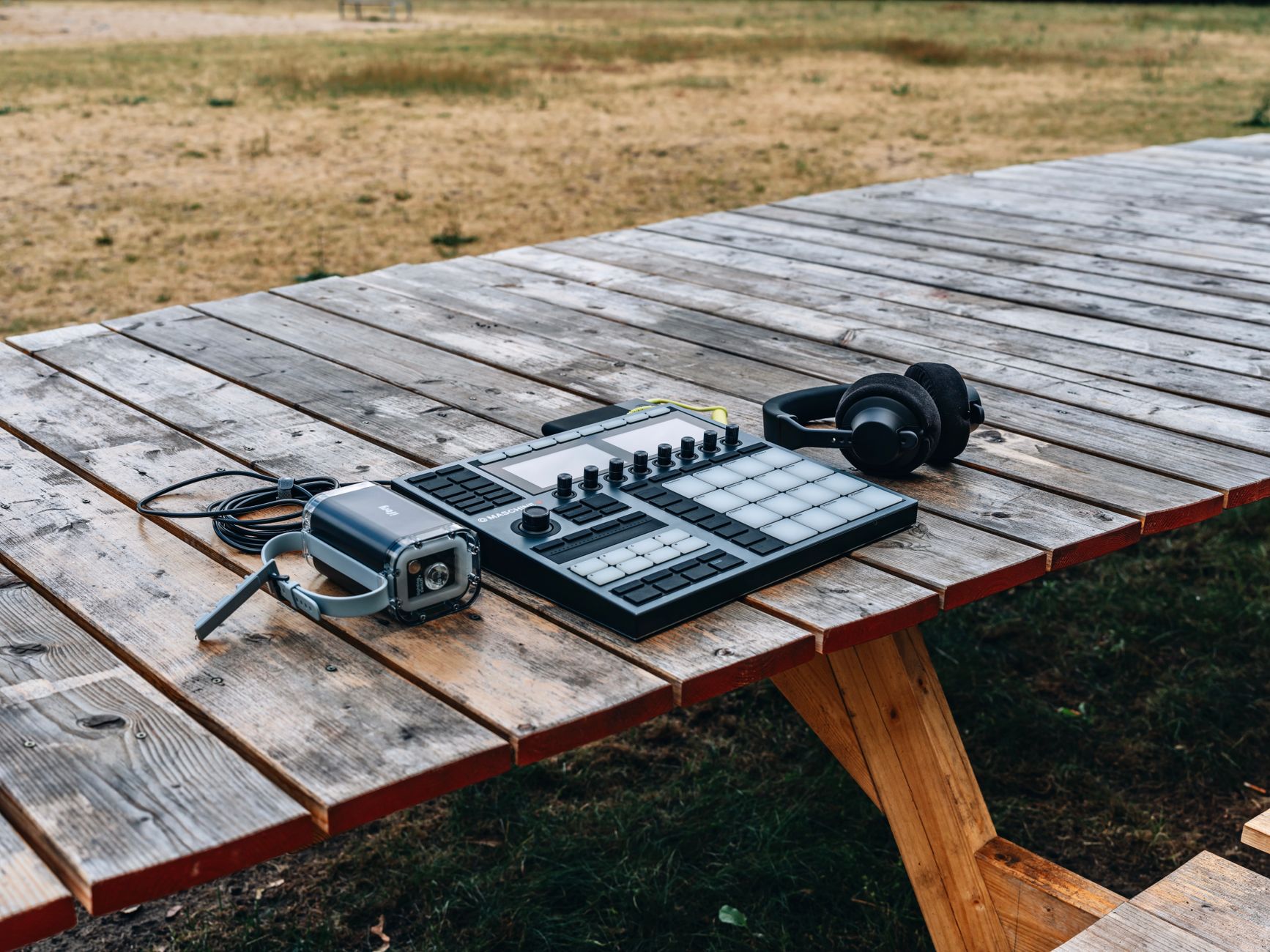 Photo: Egor Komarov via Pexels
Home studios have one persistent problem: room acoustics. Bass builds up in corners, early reflections muddy the stereo image, and a $2,000 monitor setup in an untreated bedroom can sound worse than $150 headphones. That’s why experienced home producers often mix predominantly on headphones, cross-referencing on speakers and consumer earbuds to check translation.
The tradeoff is real. Headphone stereo imaging is artificial — sounds appear inside your head rather than in a physical space. Over-relying on headphones for mix decisions can cause overcompensation for this phantom center effect. The best workflow uses both.
Open-Back vs. Closed-Back: Get This Decision Right First
Direct Answer: Open-back headphones leak sound both ways — they sound more spacious and natural, making them ideal for mixing. Closed-back headphones isolate you from the room (and the room from you), making them essential for tracking with a live microphone. Most studios own both types; if you can only afford one, match it to your primary use case.
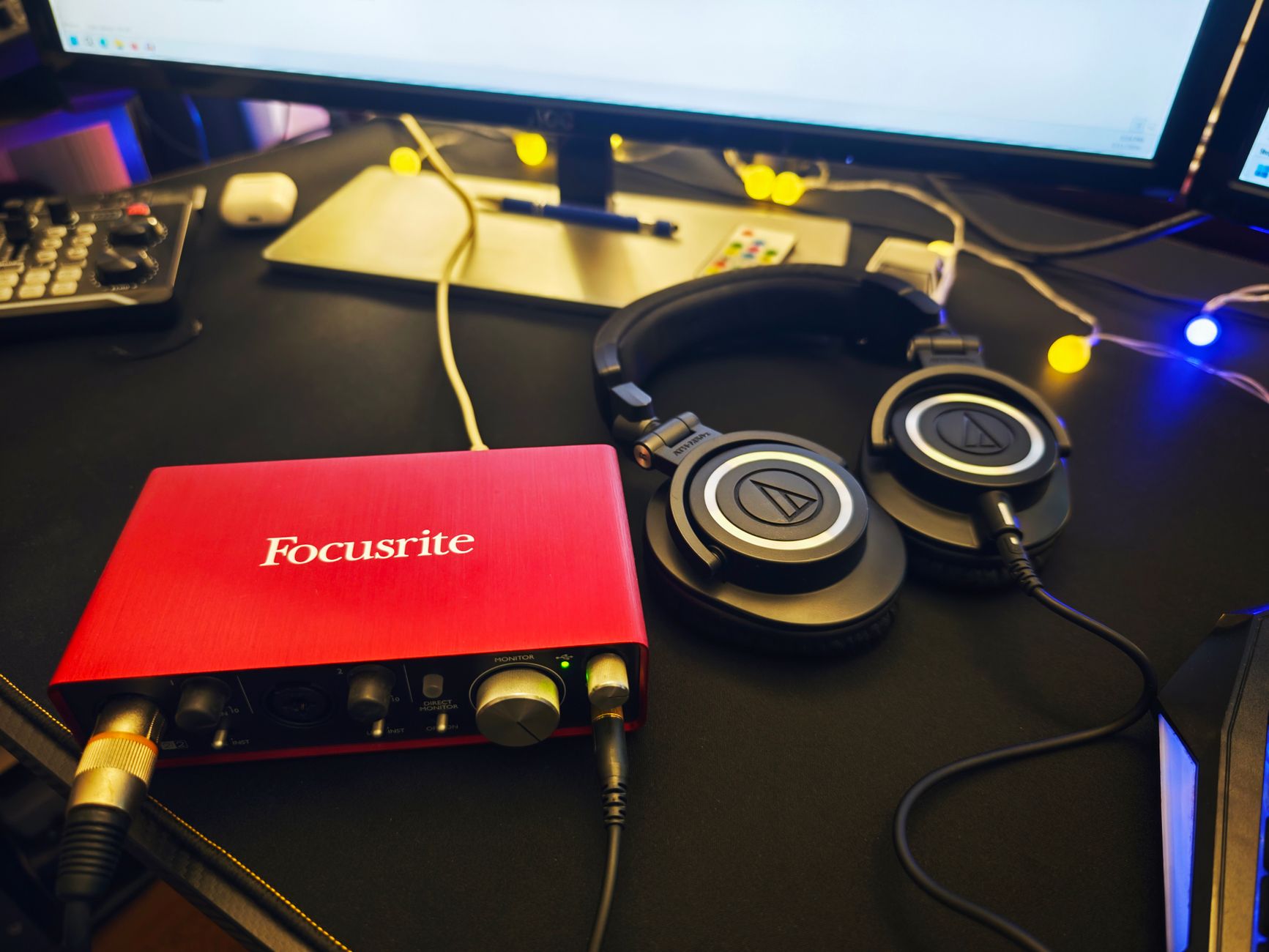 Photo: Frederick Adegoke Snr. via Pexels
When to Choose Open-Back
Open-back designs (perforated or mesh ear cups) allow air and sound to pass through the driver. The result is a wider, more speaker-like soundstage that reduces ear fatigue during long mixing sessions. The Beyerdynamic DT 990 Pro and Sennheiser HD 600 are the canonical references here.
The catch: you can’t use open-backs while recording anything with a microphone. The bleed into the mic is audible, and the sound that leaks out will annoy everyone in the room.
When to Choose Closed-Back
Closed-back headphones are the default for tracking (recording takes while listening to a monitor mix), location recording, and any situation where isolation matters. They also travel well. The Sony MDR-7506 has been the closed-back tracking standard for 30 years for good reason: rugged, accurate enough, and cheap enough to keep multiple pairs around.
The frequency response on most closed-backs is slightly colored compared to open-backs at the same price. Bass can become boomy and the soundstage narrows. This is manageable at the mixing stage if you know your headphones’ character — many engineers use reference correction software like Sonarworks SoundID Reference to flatten their response.
The Best Headphones for Music Production: Our Picks
Best Overall: Beyerdynamic DT 990 Pro
Direct Answer: The DT 990 Pro delivers an accurate, detailed frequency response with a slight high-frequency lift that reveals harsh transients and sibilance — problems you want to catch before finalizing a mix. At around $170, it’s the sweet spot between professional accuracy and accessible pricing.
 Photo: https://kaboompics.com/ via Pexels
| Spec | Detail |
|---|---|
| Type | Open-back |
| Impedance | 250 Ω (also available in 80 Ω) |
| Frequency Response | 5 Hz – 35,000 Hz |
| Driver Size | 45 mm |
| Cable | Coiled, 3 m |
| Weight | 250 g |
| Best For | Mixing, critical listening, mastering reference |
The 250 Ω version requires a headphone amplifier to reach adequate listening levels — pair it with the FiiO E10K or the headphone output on most audio interfaces and you’re fine. The 80 Ω version works directly from laptops and interfaces without a dedicated amp.
Published reviews consistently note the slight 8–12 kHz presence peak. This is useful for catching harsh vocals and cymbals, but be aware that your mixes may need a slight brightness reduction if you’re making creative decisions based purely on the DT 990 Pro.
Beyerdynamic DT 990 Pro ships with a 3 m coiled cable, a mini-jack to standard 6.35 mm adapter, and a velour earpads that make extended sessions significantly more comfortable than pleather alternatives.
Verdict by archetype:
- First-time beginner: Great pick if your interface has sufficient headphone output; skip the 250 Ω version
- Bedroom producer: Excellent daily driver for mixing and A/B referencing
- Gigging musician: Open-back design makes these impractical for stage use
- Prosumer: Strong foundation; pair with Sonarworks for near-flat correction
Best Closed-Back: Sony MDR-7506
The MDR-7506 has shipped in broadcast studios, film sets, and home studios since 1991. There’s a reason it hasn’t been replaced: the frequency response is detailed and slightly forward in the upper mids (3–8 kHz), making it excellent for catching problems in vocal recordings and dialogue.
| Spec | Detail |
|---|---|
| Type | Closed-back |
| Impedance | 63 Ω |
| Frequency Response | 10 Hz – 20,000 Hz |
| Driver Size | 40 mm |
| Cable | Coiled, 3 m |
| Weight | 230 g |
| Best For | Tracking, monitoring, broadcast, podcasting |
The build quality is deliberately utilitarian — the MDR-7506 folds flat, the headband is replaceable, and aftermarket earpads are widely available. Expert consensus suggests the stock pleather pads compress over time and should be replaced after 1–2 years of daily use; velour replacements from Brainwavz are the popular upgrade.
Verdict by archetype:
- First-time beginner: Best first studio headphone under $100
- Bedroom producer: Ideal for tracking; less ideal as a primary mixing reference
- Gigging musician: Foldable and durable enough for road use
- Prosumer: Keep a pair around as a secondary reference even after upgrading
Best for Mixing: Sennheiser HD 600
The Sennheiser HD 600 is the headphone many engineers reference when they say “flat.” Published frequency response measurements show remarkably consistent performance across units, and the soundstage — wide for a headphone — reduces the fatigue of extended mixing sessions.
| Spec | Detail |
|---|---|
| Type | Open-back |
| Impedance | 300 Ω |
| Frequency Response | 12 Hz – 39,000 Hz |
| Driver Size | 38 mm |
| Cable | Detachable, 3 m |
| Weight | 260 g |
| Best For | Mixing, mastering, audiophile listening |
At 300 Ω, the HD 600 genuinely needs a headphone amplifier. The built-in headphone output on most budget audio interfaces will drive it to listenable levels but won’t reach the headphone’s full dynamic range. The FiiO K5 Pro or a mid-range interface like the Focusrite Scarlett 4i4 are well-matched pairings.
The velour earpads are among the most comfortable in the industry. According to manufacturer specifications, the HD 600 uses a proprietary “duofol” diaphragm that reduces distortion — published third-party measurements support claims of sub-1% THD across most of the audible frequency range.
Verdict by archetype:
- First-time beginner: Overkill until you understand what you’re hearing
- Bedroom producer: Premium choice; budget for an amp to get full performance
- Gigging musician: Not designed for portability or isolation
- Prosumer: Reference-grade; competes with headphones at 2–3x the price
Best Budget Pick: Audio-Technica ATH-M40x
The ATH-M40x is the answer to “what should I buy with $100.” Unlike its more famous sibling the M50x, the M40x has a flatter low-frequency response — the M50x’s bass emphasis makes it more enjoyable to listen to music but less useful for making accurate mix decisions.
| Spec | Detail |
|---|---|
| Type | Closed-back |
| Impedance | 35 Ω |
| Frequency Response | 15 Hz – 24,000 Hz |
| Driver Size | 40 mm |
| Cable | Detachable (two cables included) |
| Weight | 240 g |
| Best For | Budget mixing and tracking, student engineers |
At 35 Ω, the M40x works everywhere — phones, laptops, interfaces — without any additional amplification. The detachable cable is a significant durability advantage; the most common failure mode of studio headphones is cable damage at the plug, and a replacement cable costs $10.
Verdict by archetype:
- First-time beginner: Best-in-class at this price for production work
- Bedroom producer: Solid until budget allows an upgrade
- Gigging musician: Compact folding design works for IEM-free stage monitoring
- Prosumer: Keep as a secondary reference for checking low-end on closed-backs
Full Comparison Table
| Product | Price (approx.) | Type | Impedance | Best For | Verdict |
|---|---|---|---|---|---|
| Beyerdynamic DT 990 Pro | ~$170 | Open-back | 250 Ω | Mixing, critical listening | Best overall |
| Sony MDR-7506 | ~$90 | Closed-back | 63 Ω | Tracking, monitoring | Best closed-back |
| Sennheiser HD 600 | ~$330 | Open-back | 300 Ω | Mixing, mastering | Best for mixing |
| Audio-Technica ATH-M40x | ~$100 | Closed-back | 35 Ω | Budget mixing and tracking | Best budget pick |
| Audio-Technica ATH-M50x | ~$150 | Closed-back | 38 Ω | General listening, some tracking | Popular but colored |
| Beyerdynamic DT 770 Pro | ~$160 | Closed-back | 250 Ω | Tracking, bass-heavy genres | Best closed-back upgrade |
Impedance and Amplification: What the Specs Actually Mean
Direct Answer: Impedance (measured in ohms) determines how much power a headphone needs to reach reference listening levels. Low impedance (under 80 Ω) works fine from any source. High impedance (150 Ω+) requires a dedicated headphone amplifier or an audio interface with a high-current headphone output.
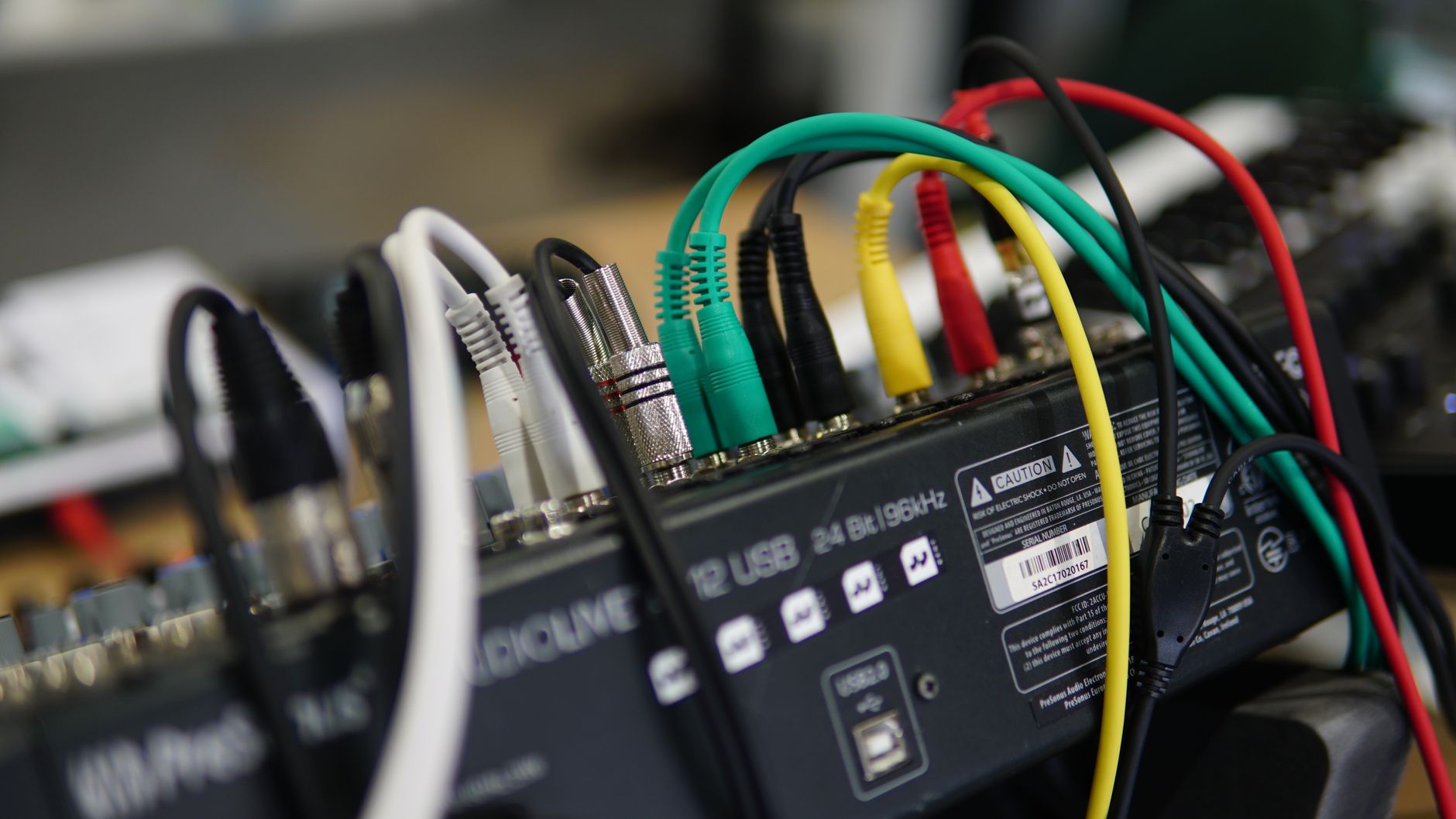 Photo: TStudio via Pexels
Most audio interfaces include a headphone output rated between 50–200 mW — sufficient for 250 Ω headphones at loud but not extreme levels. If you’re using a laptop’s built-in headphone jack, stick to headphones under 80 Ω or the dynamics will feel compressed and lifeless.
The relationship isn’t purely about volume. Underpowering high-impedance headphones causes audible distortion at moderate listening levels, which corrupts the accuracy you’re relying on for mixing decisions. A dedicated amp like the Schiit Magni or FiiO E10K eliminates this problem for under $100.
Headphone Correction Software: Worth It?
Sonarworks SoundID Reference and Waves Nx both offer headphone correction profiles that apply EQ curves to compensate for a headphone’s measured deviation from flat. According to published testing data, Sonarworks’ library covers over 500 headphone models with per-unit calibration files available for an additional fee.
The practical result is significant. The DT 990 Pro’s upper-mid presence peak disappears; the MDR-7506’s slightly hyped upper frequencies flatten out. Engineers who mix on headphones regularly report that correction software substantially improves translation to speaker systems — mix decisions made on corrected headphones correlate more closely with how the mix sounds on monitors.
The catch: correction software adds latency (usually 1–2 ms, negligible for mixing) and requires running in a DAW plugin or system-wide application. It’s a worthwhile $99 investment once you’ve purchased a quality pair of headphones and are committed to headphone-based workflows.
→ See also:
- Best Studio Headphones for Home Recording (2026) — pillar overview covering every category
- Best Studio Headphones Under $100 — tighter budget? Start here
- Best Budget Studio Headphones — all affordable options ranked and compared
FAQ
Do I need expensive headphones to make good music? No. The ATH-M40x at $100 is flat enough to make professional-sounding mixes once you’ve learned how it sounds. Expensive headphones reduce uncertainty and ear fatigue — they don’t make you a better engineer. Learn your headphones’ character and compensate; many professional tracks have been mixed on MDR-7506s.
Can I mix on consumer headphones like AirPods or Beats? Not reliably. Consumer headphones are voiced to sound exciting — boosted bass and treble make music enjoyable to listen to but make mix decisions inaccurate. A mix that sounds balanced on AirPods will typically be bass-heavy and dull on flat speakers. Use consumer headphones as one of several reference checks, not as a primary mixing tool.
What’s the difference between the ATH-M50x and ATH-M40x for production? The M50x has a more elevated bass response and a V-shaped frequency curve that sounds better for casual listening but introduces the same translation problem as consumer headphones. The M40x is flatter and more useful for making accurate mix decisions. Expert consensus among home studio engineers consistently recommends the M40x over the M50x for production use.
How long do studio headphones last? The mechanical components of quality headphones — drivers, headband, cups — typically last 5–10 years of regular use. The failure points are cables (replaceable on most models) and earpads (replaceable via third-party parts for virtually every model in this guide). The MDR-7506 and DT 990 Pro both have robust aftermarket parts ecosystems that extend their service life indefinitely.
Should I buy open-back or closed-back headphones as my first pair? Closed-back if you record with a microphone in the same room as your headphones — you need the isolation. Open-back if you’re primarily mixing without live mic work. If you’re unsure, start closed-back (ATH-M40x or MDR-7506) and add open-back headphones when you’re ready to invest in your mixing workflow.
Is a headphone amplifier necessary for home studio work? Only for high-impedance headphones (150 Ω+). Most audio interfaces provide adequate output for 80 Ω headphones and below. If you buy the DT 990 Pro or HD 600 in their standard 250–300 Ω versions, budget $50–100 for a basic headphone amp or choose an interface with a high-quality headphone stage like the Focusrite Scarlett or Universal Audio Volt series.
Editorial methodology: Assessments are based on manufacturer specifications, published user reviews, and editorial research. Physical hands-on testing is noted explicitly where it occurred. Rankings reflect our editorial judgment and are not influenced by affiliate commission rates. Full editorial policy · Affiliate disclosure