Contents
Best Studio Headphones Under $100: Top Picks for 2026
TL;DR: The best studio headphones under $100 deliver honest, flat frequency response without breaking the budget. The Audio-Technica ATH-M40x is the top overall pick — extended low-end, tight mids, and detachable cables at $69. If you need open-back monitoring, the AKG K240 Studio edges in under $70 with semi-open acoustics that reduce ear fatigue on long sessions.
Why Budget Studio Headphones Have Gotten Genuinely Good
Direct Answer: The $50–$100 bracket now contains headphones that were $150–$200 territory five years ago. Driver and housing manufacturing costs have dropped sharply, and the pro-audio demand for affordable monitoring has pushed brands to compete on actual frequency accuracy rather than consumer-tuned bass boost.
 Photo: Boris Hamer via Pexels
The gap between a $100 studio headphone and a $200 one is real but narrower than it used to be. What you give up is typically build quality (plastics over metal), driver matching tolerance, and cable quality — not necessarily the frequency response itself. Published measurements from sites like InnerFidelity and Rtings show several sub-$100 cans measuring flatter than some $200 consumer headphones.
What to look for in this price range:
- Frequency response: Aim for ≤3dB deviation in the 200Hz–8kHz range
- Impedance: 32–80Ω works without a dedicated headphone amp; 250Ω (common in Beyerdynamic) needs one
- Closed vs. open back: Closed = isolation for tracking; open = wider soundstage for mixing
- Clamping force: Often overlooked — tight clamping causes fatigue in 2+ hour sessions
Best Overall: Audio-Technica ATH-M40x
Direct Answer: The ATH-M40x is the most balanced all-around studio headphone under $100. Flat through the mids with extended low-frequency response to 15Hz, detachable cables (both coiled and straight included), and 90° swiveling earcups. At $69 street price, it outperforms the more famous ATH-M50x for pure monitoring because it skips the M50x’s hyped bass shelf.
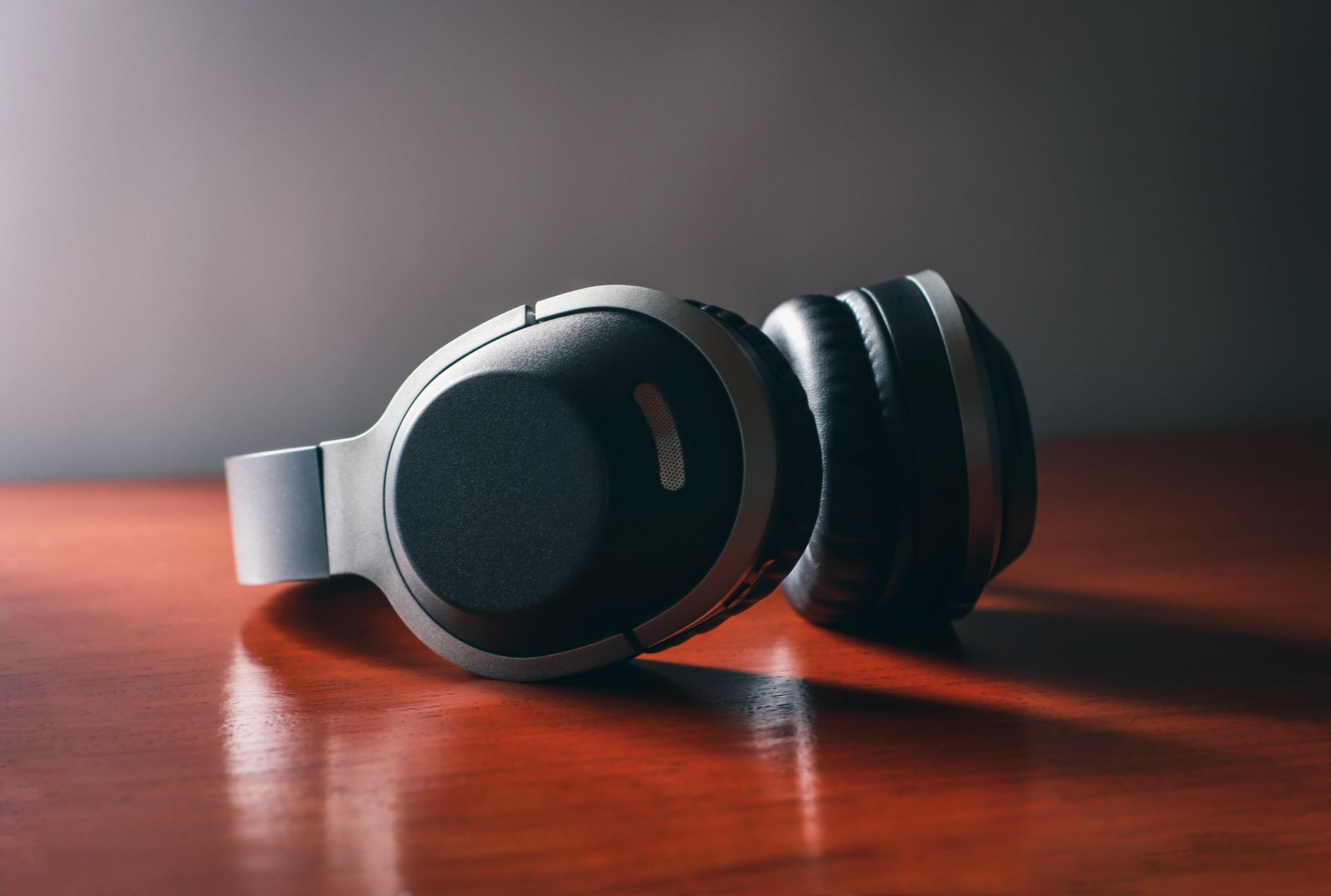 Photo: Harvey Tan Villarino via Pexels
Specs:
| Spec | Value |
|---|---|
| Driver size | 40mm |
| Frequency response | 15Hz–28kHz |
| Impedance | 35Ω |
| Sensitivity | 98 dB/mW |
| Cable | Detachable (1.2m straight + 3m coiled) |
| Weight | 240g |
| Closed/Open | Closed-back |
Published measurements from multiple independent sources confirm the M40x sits within ±3dB from 100Hz to 10kHz — a benchmark many $200 headphones don’t hit. The low impedance means it runs clean from a phone, interface headphone out, or audio interface without a separate amp.
Verdict by user type:
- First-time beginner: Best single purchase you can make — honest sound, durable, works with any interface
- Bedroom producer: Solid for tracking and rough mixing; upgrade the mix environment (room treatment) before upgrading these
- Gigging musician: Great in-ear monitor alternative for rehearsal monitoring; folds flat for transport
- Prosumer: Use as a second reference pair or travel headphone — not a replacement for open-back mixing cans at this price
Best Open-Back Under $100: AKG K240 Studio
Direct Answer: The AKG K240 Studio is the standard open/semi-open recommendation under $100. Semi-open acoustics mean reduced pressure buildup compared to fully closed designs, making them noticeably more comfortable over 4+ hour sessions. The 55Ω impedance is easy to drive from most interfaces, and the self-adjusting headband fits a wide range of head sizes without adjustment.
 Photo: RDNE Stock project via Pexels
Specs:
| Spec | Value |
|---|---|
| Driver size | 30mm |
| Frequency response | 15Hz–25kHz |
| Impedance | 55Ω |
| Sensitivity | 91 dB/mW |
| Cable | Detachable, mini XLR |
| Weight | 240g |
| Closed/Open | Semi-open |
The tradeoff: semi-open means moderate bleed. They’re not suitable for tracking vocals or acoustic instruments if you’re recording with a sensitive microphone nearby — the open driver will bleed into your mic. Use them for mixing, editing, and playback where bleed doesn’t matter.
Expert consensus among home-studio communities consistently cites the K240 as the budget entry point for open-back monitoring. The mini-XLR cable connector is durable and easy to replace.
The Full Comparison: Every Serious Option Under $100
| Product | Price | Type | Impedance | Best For | Verdict |
|---|---|---|---|---|---|
| Audio-Technica ATH-M40x | ~$69 | Closed | 35Ω | Tracking + mixing | Top pick |
| AKG K240 Studio | ~$69 | Semi-open | 55Ω | Mixing + long sessions | Best open-back |
| Sony MDR-7506 | ~$89 | Closed | 63Ω | Broadcast + field work | Pro workhorse |
| Sennheiser HD 280 Pro | ~$79 | Closed | 64Ω | Isolation + tracking | Best isolation |
| Beyerdynamic DT 240 Pro | ~$79 | Closed | 16Ω | Mobile + low-power setups | Best for phone/tablet |
| Samson SR850 | ~$39 | Semi-open | 32Ω | Budget entry point | Tightest budget |
Sony MDR-7506: The Broadcast Standard
Direct Answer: The Sony MDR-7506 has been a studio standard since 1991 and remains the default headphone on broadcast sets, film locations, and radio stations worldwide. It’s not the flattest-measuring headphone in this bracket — it has a slight presence boost around 8–10kHz — but its familiarity, durability, and availability of replacement parts make it a reliable workhorse.
At $89, the MDR-7506 costs more than the M40x but delivers a coiled cable better suited to a fixed studio position, slightly more low-end extension per manufacturer specifications, and a folding design that’s traveled well for decades. The 63Ω impedance runs cleanly from most audio interfaces without amplification.
Where it falls short for pure monitoring: the hyped upper-mids can make harsh recordings sound harsher, leading to over-EQ. If your primary goal is flat reference monitoring, the M40x or K240 are better calibrated choices.
Sennheiser HD 280 Pro: Maximum Isolation
Direct Answer: The Sennheiser HD 280 Pro offers up to 32dB of passive attenuation per manufacturer specifications — the highest isolation figure of any mainstream headphone under $100. That makes it the correct choice for tracking in loud live rooms, drum recording, or any environment where bleed from the room into a mic is a concern.
The sound signature is darker and more recessed in the upper-mids than the M40x, which is a useful characteristic when you’re coaching a vocalist and want to reduce fatigue from loud foldback levels. At $79, it’s one of the better-built options in this bracket with a replaceable earcup and cable system.
Downside: the clamping force is high. Users with larger heads report discomfort after 90 minutes. Manufacturer-recommended break-in involves gently bending the headband to reduce clamp — documented workaround in Sennheiser’s own support materials.
Beyerdynamic DT 240 Pro: Mobile-First Studio Monitoring
Direct Answer: The DT 240 Pro is Beyerdynamic’s sub-$100 entry and the right pick when you’re monitoring from a laptop headphone out, mobile interface, or iPad. At 16Ω impedance and 99dB sensitivity, it requires almost no amplification — rare for Beyerdynamic, who typically spec 250Ω on their studio line.
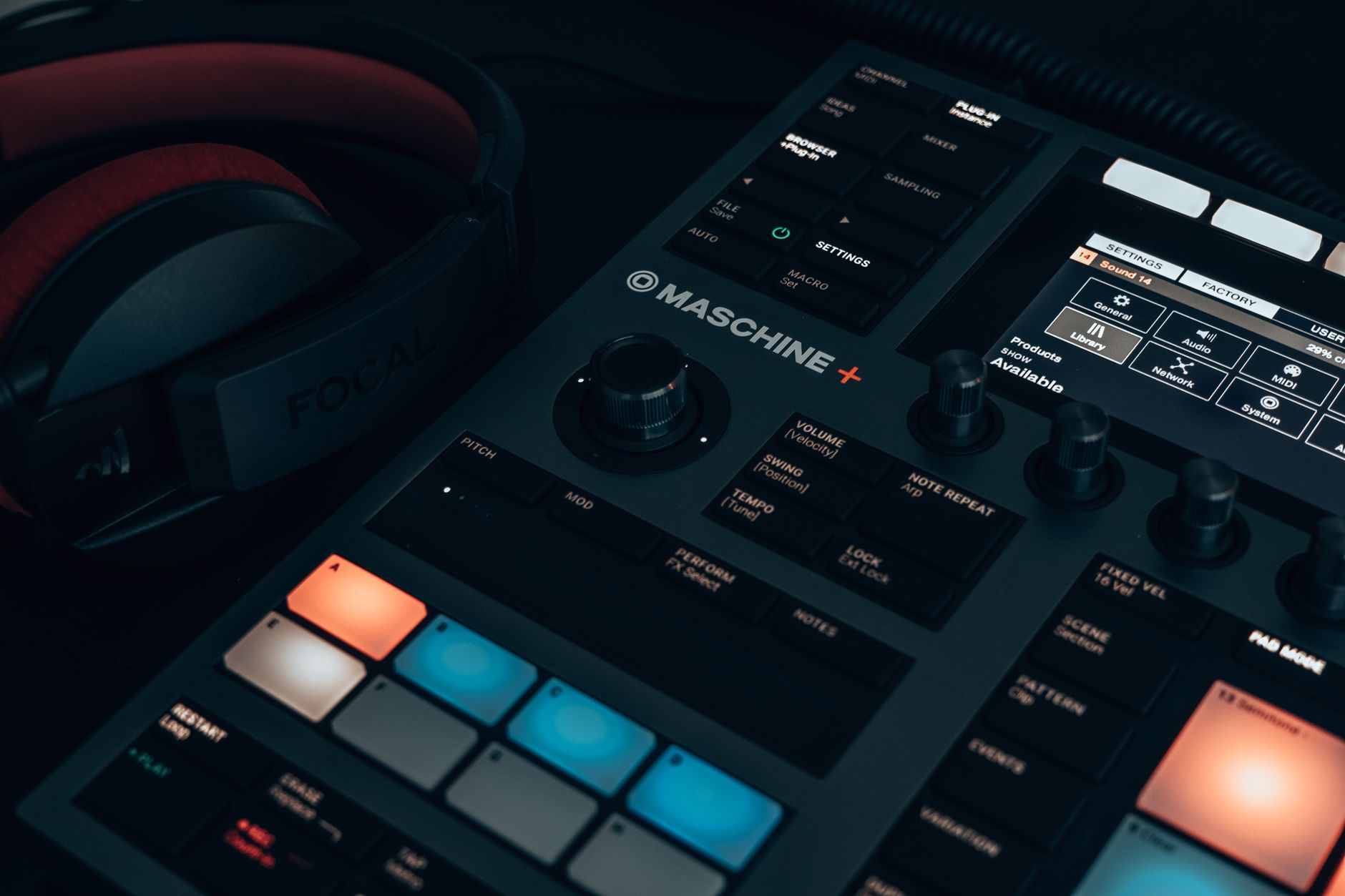 Photo: Egor Komarov via Pexels
Published frequency response from Beyerdynamic shows a relatively flat 5Hz–35kHz spec. Real-world user reviews note slightly emphasized bass compared to the M40x but still far less hyped than consumer equivalents. The folding design and included carrying case make it the best travel option in this comparison.
What You Actually Lose Under $100 vs. $200+
It’s worth being direct about the tradeoffs rather than overselling the budget bracket:
Build quality: Headbands and hinges at this price range are typically polycarbonate over metal. Published failure reports in user communities cluster around the headband joint and earcup swivel — not the driver itself. The driver often outlasts the hardware.
Driver matching: Premium headphones spec tight channel balance (±0.5dB). At $100, manufacturer tolerances are typically ±1–2dB. Audibly relevant on critical mix work; irrelevant for tracking and general use.
Cable quality: Most sub-$100 headphones use budget OFC cables. The actual sonic impact is negligible at these impedance levels — the bigger issue is mechanical durability. Detachable cables (M40x, K240) solve this; fixed cables (MDR-7506 coiled) are more robust than cheap detachable connectors.
Soundstage and imaging: Open-back headphones above $200 produce a noticeably wider stereo image. The K240 gives you most of that at $69. Fully closed-back headphones under $100 produce a narrower, more in-head image that can make stereo placement harder to judge.
Open-Back vs. Closed-Back: Which Do You Actually Need?
| Closed-Back | Open-Back / Semi-Open | |
|---|---|---|
| Tracking vocals/instruments | ✅ Required | ❌ Bleed risk |
| Mixing in a quiet room | ✅ Works | ✅ Better stereo image |
| Long editing sessions | Fatiguing | Less fatiguing |
| Shared/noisy spaces | ✅ Isolation | ❌ Everyone hears your mix |
| Best under $100 pick | ATH-M40x | AKG K240 Studio |
If you do one thing in the studio, pick based on that task. If you track and mix, get the M40x first — open-back can wait for a second pair.
Do You Need a Headphone Amp?
Most headphones under $100 are designed to run directly from audio interfaces. The low-impedance options (M40x at 35Ω, DT 240 Pro at 16Ω) will run at full output from a smartphone headphone jack. Mid-impedance options (MDR-7506 at 63Ω, HD 280 Pro at 64Ω, K240 at 55Ω) benefit from a dedicated amp but aren’t broken without one.
The only common sub-$100 recommendation that genuinely needs amplification is the Beyerdynamic DT 770 Pro 250Ω — worth noting because it sometimes appears on “best under $100” lists at sale prices. At 250Ω, it will sound thin and quiet from a basic audio interface’s headphone output.
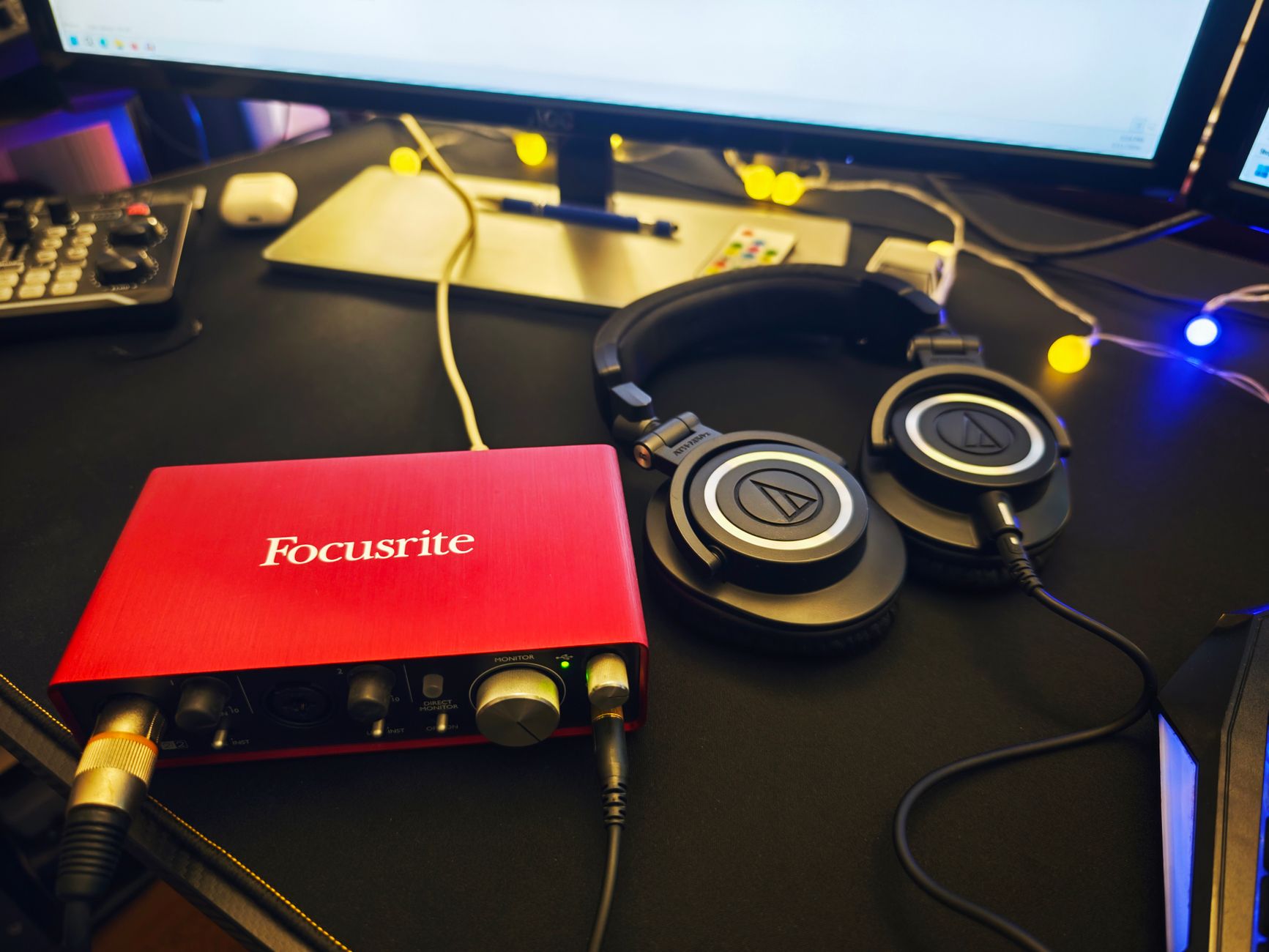
If you’re buying your first interface, any mainstream option (Focusrite Scarlett, SSL 2, Audient EVO) has enough headphone output to drive the entire list above at adequate listening levels.
→ See also:
- Best Studio Headphones for Home Recording (2026) — full-range guide including $200–$500 options
- Best Headphones for Music Production — workflow-specific picks for beatmakers, tracking engineers, and mastering
- Best Budget Studio Headphones — the $30–$60 bracket when budget is the hard constraint
FAQ
Are studio headphones under $100 good enough for professional work? Yes, with context. The ATH-M40x and MDR-7506 are used in professional broadcast and recording environments globally. The ceiling is your decision-making process and room acoustics, not the headphones at this price point. For final masters on commercial releases, most professionals reference on multiple systems — headphones are one data point.
What’s the difference between studio headphones and regular headphones? Studio headphones target a flat frequency response so you hear the recording accurately. Consumer headphones typically boost bass and treble for a more exciting listener experience. That boost masks problems in a mix — you’ll EQ incorrectly because you can’t hear what’s actually there.
Can I use the ATH-M40x for gaming and music listening, not just recording? The flat response makes music sound more neutral than you might be used to — accurate, but not hyped. For gaming, the closed-back design provides some noise isolation and the soundstage is adequate for positional audio. They’re fine for general use but won’t give you the “wow” of a V-shaped consumer headphone.
Is the Sony MDR-7506 still worth buying in 2026? Yes. The presence-forward tuning is a known quantity that engineers have mixed on for 35 years, replacement earcups and cables are widely available, and build quality has remained consistent across production runs. According to user reviews across multiple audio forums, failure rates are low even after years of daily use. The main reason to skip it is if you want flatter high-frequency response — in that case, the M40x is the better measurement choice.
Do I need to burn in new studio headphones? Manufacturer and independent testing data shows no measurable change in driver performance from burn-in. The perception of improvement after extended use is more likely perceptual adaptation — your brain learning the headphone’s sound signature. No need to run pink noise for 24 hours before using them.
What headphones do professional mixing engineers use when they’re not in a treated room? Expert consensus across mixing forums and published interviews points to the Sony MDR-7506 and Sennheiser HD 650 (above $100) as the most common professional headphone choices. In the sub-$100 bracket, the M40x and MDR-7506 appear most frequently in published home studio setups. Both translate well to speaker playback when you understand their sound signature.
Editorial methodology: Assessments are based on manufacturer specifications, published user reviews, and editorial research. Physical hands-on testing is noted explicitly where it occurred. Rankings reflect our editorial judgment and are not influenced by affiliate commission rates. Full editorial policy · Affiliate disclosure